A package is an invoice with a payment already attached to it, so what a client has left is a number on the record rather than a figure the front desk reconstructs from a card in a drawer.
Beauty, wellness, and salon studios
Owner-run studios and small chains — a front desk, therapists working on commission, a product shelf, and a handful of rooms that are the real limit on what the business can sell in a week.
The problem
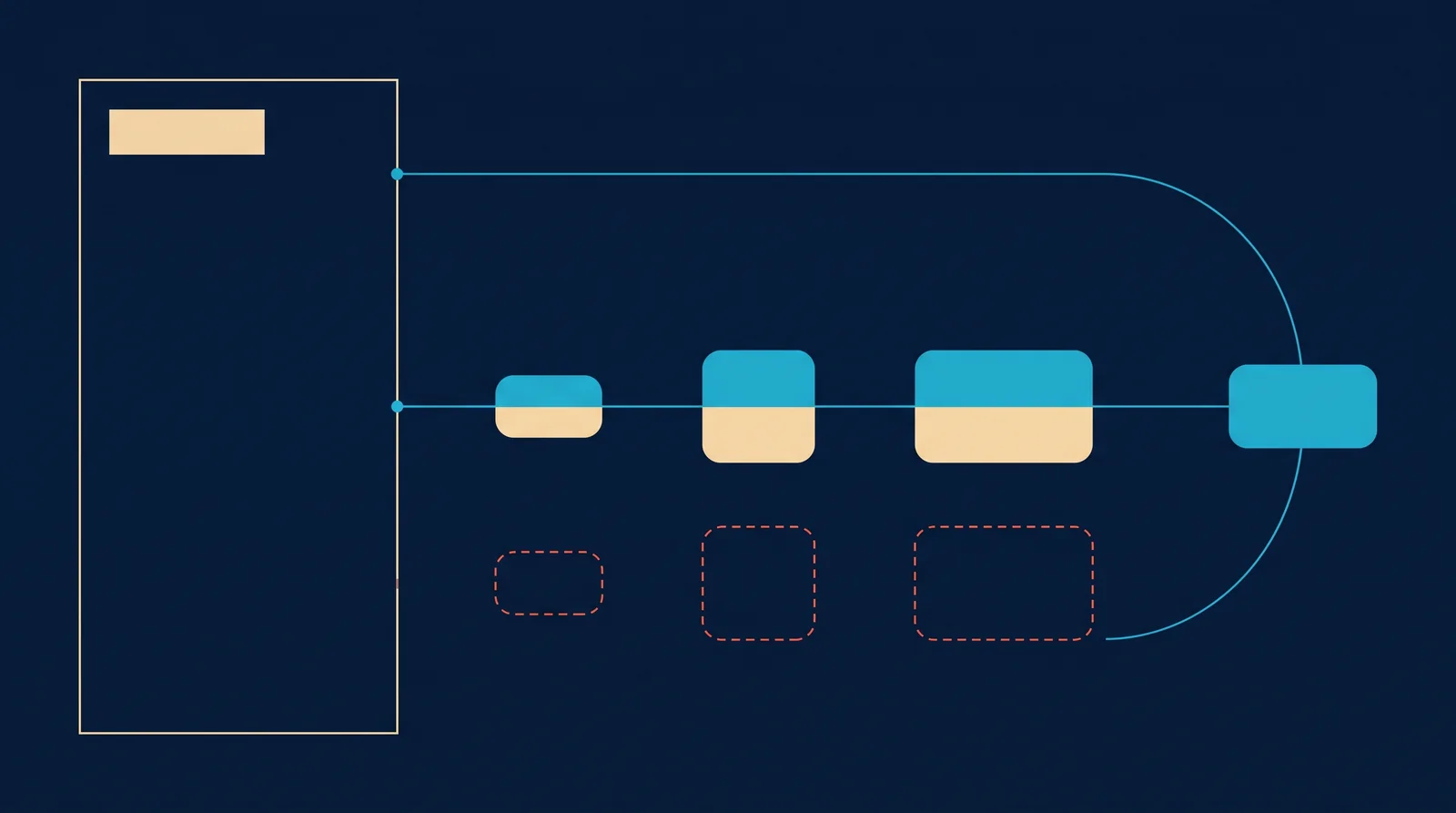
Two different sales happen at the same counter and they are not the same shape. A single service has a price, takes three quarters of an hour, and is paid for on the spot. A package is a priced list of treatments to be delivered over the next several months, and the money is taken now, which means the studio holds cash against work it has not done and has not even scheduled. That second sale is the one that goes wrong quietly: the package card lives in a drawer, the client asks how much is left, and the answer comes from whoever has been here longest. Alongside it sits the part nobody can reconstruct later — which therapist did which treatment, what the client said she was allergic to, and what she bought last time. A no-show is also a real fact in this trade, but it is a hole in today's list rather than a delivery going wrong, and treating it as one produces a great deal of noise.
A working day
The day starts with a list of who is coming and which therapist each of them is with. A client wants to buy a package and wants to know whether the price is better per session. Another client wants a refund on the unused part of a package she bought last year, and the answer depends on terms written on a form she signed once. A room is blocked for a treatment that has been moved twice. Someone needs a discount approved. At close, the day's money has to be split between what was taken at the counter, what was taken against a package already paid for, and what is sitting on a promise.
How NoxOrigin fits this business
Every business runs the same sequence, from first contact to money in. NoxOrigin keeps each step tied to the last: Customer → Opportunity → Quote → Project → Work → Invoice → Payment.
The steps are the same. What changes is the words you use for them, the pressure at each one, and who is responsible for it. This is how it reads for beauty & wellness studios.
Enquiry or booking
Customer → Opportunity
An appointment is not a quote, and it does not behave like one: it commits a room, a therapist, and an hour, and the same client booking twice and being told different things by two people is a client who stops booking. What the record needs is the client, the treatment they asked for, and who is answerable for the next message. What it does not get is a calendar — there is no appointment book, no availability engine, and no reminder sending in NoxOrigin, so the studio's own diary stays the diary, and this record holds the commercial side of the person behind it.
Service or package price
Quote
A single service can be priced at the counter and taken straight away. A package cannot: it is a list of treatments with a price per treatment, bought together, deliverable over months, and every later question — what is left, what is refundable, what happens if she only wants the facial — is answered by those line items. So the package price is a structured quote with line items and a tax treatment, not a number in a package card, and the discount a client negotiates on the bundle is visible as a priced line rather than as a favour nobody can reproduce later.
Package sold
Project
Once the package is sold, what the studio owes is a set of treatments to a named client over a period, and each one needs a therapist, a room, and a slot. That is the closest thing this trade has to a project, and it is the record a redemption has to attach to, because a treatment marked off against nothing in particular is how a package ends up disputed at the twelfth session rather than the first. There is no milestone record and no deliverable record, so what the package carries is the client, what is owed, the work done against it, and the dates people agreed to — which is enough to settle a session and honestly less than a session-credit system.
Treatment delivered
Work
Each treatment is work against the package, and it is the only evidence that a session happened, when, and who did it. This is also where the economics the studio actually argues about live — the consumables used and the time on the chair — and the product will not measure either: there is no timesheet record and no payroll module, so commission is calculated outside the platform and a room blocked for an hour with nobody in it looks exactly like a room that earned. Expenses are not part of the platform subscription either; expense tracking is in Nox-Billings and purchasing is in Commerce.
Service invoice or package credit
Invoice
A single service is billed at the counter while the client is sitting there, and a package was invoiced once, when it was sold. Those are different documents and they must not be collapsed into a single number per client, or the studio cannot tell what it actually took this month. A refund, a goodwill gesture, and an adjustment to a package that was underpriced all produce money moving the other way, and each needs a document that says which package, which client, and why — because the person authorising it is usually not the person who will be asked about it in three months.
Payment or package advance
Payment
A package is a part payment against an invoice for services that do not exist yet. The cash is in hand and the obligation is open, and the two facts sitting on one record is the whole point: each receipt attaches to the invoice it settles, so what is still owed is a derived number from the payments already recorded rather than a figure from memory, and a client asking how much she has left gets the same answer the studio's accounts would give. Invoice and payment are separate records here, and no stored paid flag is doing the work.
Studio economics
Reports
Billed and collected value by service, by therapist, and by room is what tells an owner which treatments to keep on the list and which therapists to keep on the roster, and it is a different answer from which services sold most. What it cannot give is utilisation: booked hours are not in the product, so a room that earned well and a room that was blocked for two hours both appear as a room that earned. The commission calculation stays outside the system for the same reason.
What changes
What is different by next week.
A treatment delivered is recorded as work against the package, so a client who says she came in last month is answered by a named therapist and a date rather than by whoever is on the desk today.
A single service and a package stop sharing one running total, which is the only way the owner can see what the counter actually took this month as distinct from what was collected on sales made months ago.
Therapist commission can be computed from billed and collected value by therapist and by service, instead of being retyped from a sheet of paper into a spreadsheet every month.
A no-show is recorded as a fact about the day against a named client, which changes tomorrow's list and nothing else — it is not a delivery at risk, and it does not get escalated like one.
Who does what
Different people need different parts of the same information.
Everyone is looking at the same information. What changes is which part of it they are responsible for.
- Owner / founderSets what a package is worth, decides what an unused balance is worth as a refund, and reads the studio's economics by service, therapist, and room.
- Front desk / client managerBooks the day, prices the service or package, takes the payment, records the treatment as it happens, and handles the rebooking and the refund conversation.
- TherapistWorks the day's list with the client context that matters — what the client asked for, what she cannot have, what is left on her package — and not the studio's takings or another therapist's list.
- AccountsRaises the invoices, records the payments and the credits, works the outstanding list, and hands a clean tax breakup to the accounting package that does the filing.
What software should not decide
NoxOrigin keeps the facts. You still make the decisions.
Keeping the facts in one place ends the argument about what happened. It does not make the decisions that were always yours to make.
- Whether to let a client hold an unused package balance indefinitely, refund it, or quietly let it lapse. Holding it costs nothing until she asks, refunding it costs cash and sets a precedent, and letting it lapse is a policy nobody ever decided to have.
- Whether commission is calculated on billed value or on collected value. Billed is simpler and pays for work that has not been paid for; collected is honest and gets argued about every single month.
- Whether a discount belongs at the counter at all, given that the price of a treatment is the price of a therapist's time. Discounting the single service is a margin decision on a full hour of somebody's chair; discounting a bundle is a decision you can repeat.
- Whether to fill a gap in a room by moving somebody else's appointment, which is a promise to one client made on the back of another and rarely read as such at the time.
- Whether a therapist is worth keeping on the strength of a busy month that was carried by one package that has since been fully redeemed and will not be replaced.
Free tools
What this trade tends to ask, answered with a calculator.
Markup vs margin calculator
Whether a package is priced off what the treatments cost to deliver or off what the chair has to earn in that hour, and what the difference does once consumables and commission are in it.
Quotation generator
A line-item price for a treatment or a package of treatments, with per-line tax and the margin it actually leaves. A calculation to paste into a quote, not a signed quote living in the system.
Where to look next
The product areas this depends on.
Customers & CRM
The client, what they bought, what is left on the package, and the last person who saw them — in place of a phone number, a card, and a chat thread.
Quotes, Billing & Finance
The single service billed at the counter, the package invoiced once with the part payment already against it, and the refund or credit note.
Reports & Economics
Billed and collected by service, therapist, and room. It will not show hours or commission, because the product has no timesheet to derive them from.
Platform & Control
PIN access per person, so a therapist sees their own day and not the studio's takings, with discount and credit approvals sitting where you put them.
Before you look at pricing.
Is this salon or spa management software with a booking calendar?
No, and it is worth saying first because it is the first thing this trade looks for. There is no appointment calendar, no availability or room-allocation engine, no automated reminders, and no waiting list in NoxOrigin. Your diary stays whatever it is today, and this product will not try to replace it. What NoxOrigin holds is the commercial side of the day: the client, the priced service or package, the work recorded against a package, the invoice, the payment, and the refund.
What happens to money taken for a package before the treatments happen?
It stays attached to the invoice it was raised against, as a payment record rather than a flag on the client. What is still owed is derived from the payments recorded against that invoice, so cash in hand and work still to be done sit on the same record without being confused for one another. There is no separate unearned-revenue register and no session-credit wallet: the package is the invoice, the sessions are work against it, and the balance is arithmetic on those two.
Do you track therapist hours, commission, or payroll?
No. There is no timesheet record and no payroll module, and the work record will not pretend to be either. What you can read is billed and collected value by therapist and by service, which is the input to a commission calculation you run yourself — the product does not compute commission, capture hours, or pay anyone. Room and chair utilisation is not measured either, because both need booked time the product does not hold. Expenses are also not part of the platform subscription: expense tracking is in Nox-Billings and purchasing is in Commerce.
Is there a membership, loyalty, or client record with visit history?
The customer record holds the client's details, what has been quoted, billed, and collected, and the work recorded against what they bought, which is enough to see whether a client came back and what she bought when she did. Package expiry dates, automatic reminders to redeem a balance, loyalty points, and a stored client wallet are not in the product, and any of those is real work you would be building rather than configuring.
Can the front desk give a discount or a refund without asking the owner, and who handles the tax?
That is a permissions decision, and for a studio it is worth being deliberate about. Discount approval, invoicing, payment recording, and credits are separate explicit permissions evaluated per action, with PIN-based access, so the owner can hold refunds while the front desk records treatments all day without a shared login. On tax: invoices are GST-compliant with a tax breakup, and the rate and place of supply are configured for your business during setup rather than assumed — but NoxOrigin prepares invoices and reports, it does not file GST returns or any other return, and your compliance position is a question for your own adviser rather than something to infer from a tax breakup on an invoice.