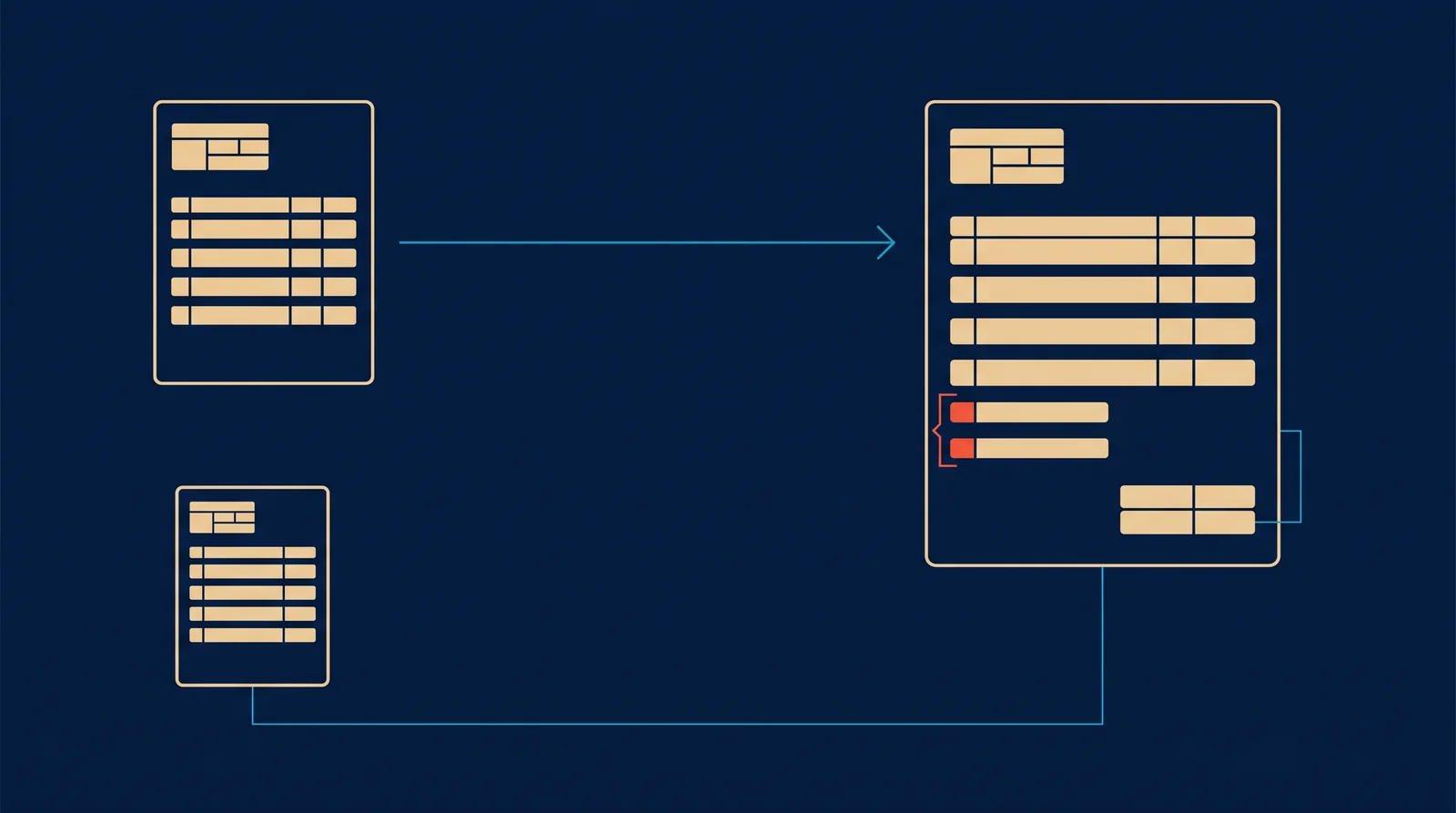
A return becomes a credit note against the original invoice rather than an edit to it, so the customer can see what was billed, what was given back, and why their account moved — and so the hire's real value survives into next month.
Equipment Rental & Hiring
Businesses that hire out plant, machinery, tools, or gear — where the unit on the yard is either out on a hire or waiting for the next one, and the decision the business actually makes is what came back, in what condition, and on what day.
The problem
A rental business sells the same thing twice. The first sale is the hire: a machine or a piece of gear goes out on a rate, against a deposit, for a period the customer says it needs. The second sale is the return, and it is the one that decides whether the first was profitable, because a hire that comes back dirty, late, short of fuel, or not at all is a different commercial event from a hire that came back on time. The difficulty is that the return touches two systems that do not normally speak to each other: the billing side needs a credit note so the customer's account is right, and the stock side needs a receipt so the yard knows the unit is back and hireable. Do those by hand, as most do, and the day's stock and the day's billing quietly disagree, and the number nobody can produce is how much of the yard was out on the last day of the month. Then there is the unit itself. A rental business thinks in machines with identities — the one with the hours on it, the one that was replaced last year — and that identity is exactly what a quoting and billing record does not hold. Deciding who gets the older unit, what a missing accessory is worth, and whether a customer is a good risk are all real judgements made from a mixture of memory, a yard register, and the customer's own reputation.
A working day
The morning is a queue at the counter and a yard that has to be walked. Machines that were due back yesterday are not back, and the phone call about that happens before anyone has opened anything. A new hire is agreed in a few minutes — which unit, which rate, for how long, against what deposit — and the decision about which specific unit goes out depends on what came back yesterday and what the yard says about hours and condition. Mid-day the return happens: the customer brings it back, somebody checks it, and the honest answer to 'is it the same machine' and 'what is missing' turns on a yard register and a person's eye rather than on anything in the office system. A damage charge has to be justified to a customer who came back on time, and that conversation needs the hire, the return, and the original rate on the table together. Then the paperwork splits: a credit note for the bill, a receipt for the stock, a deposit adjustment, and at month end a manager who wants to know what is out, what is due back, and what that is worth.
How NoxOrigin fits this business
Every business runs the same sequence, from first contact to money in. NoxOrigin keeps each step tied to the last: Customer → Opportunity → Quote → Project → Work → Invoice → Payment.
The steps are the same. What changes is the words you use for them, the pressure at each one, and who is responsible for it. This is how it reads for equipment rental.
The customer with a need and a hire history
Customer → Opportunity
The enquiry has to become a customer record with a company, a contact, a phone number, and what they have hired before, because in this trade the second hire depends entirely on how the first went — a customer whose machine came back on time and intact is a different prospect from one who argues about damage, and neither fact is in a quote. Merge policy is a setup decision: duplicate detection flags candidates and a person reviews them, since the same firm often books under a contractor name, a proprietor name, and a site name and nothing merges automatically.
The hire quoted on the rate card
Quote
The quote is the unit or the machine class, the rate for the period, the delivery or collection, the deposit, and what happens to the rate if the hire runs long — so that extending a hire is a new quote rather than a rate somebody edited in a hurry on the counter. A rate quoted without the period attached is the most common way a rental invoice becomes a dispute. There is no e-signature and no contract editor, so a hire agreement or a rental contract stays where the business keeps signed contracts.
The hire as a live job
Project
Once the quote is accepted the hire becomes the live record with the customer, the equipment, the period, the terms, and what was dispatched, so that the return, the extension, and any additional item show as events against the hire rather than as gaps in a month. A change to a hire — extra days, an added breaker, a different machine — is a new quote on the same hire. There is no change-request record, no milestone record, and no deliverable record, and nothing here schedules a dispatch vehicle or holds a unit's identity.
The return, and what came back
Work
The work is the dispatch, the extension, the return, the check, and the damage conversation — recorded against the hire, so the next time this customer comes in, the person at the counter is arguing from what actually happened rather than from what was promised. It is the only place the operational cost of a hire is visible, and a damage charge does not reach the customer unless it is raised as its own billing line. There is no damage or loss assessment record, no inspection form, and no timesheet or payroll module, so what a unit lost is a number and a judgement rather than a measured finding.
The invoice for the hire period
Invoice
The bill carries the unit, the rate, the period actually run, the delivery or collection charge, and the deposit treatment, so a customer can see why an extended hire is bigger than the quote they remember. An invoice and a payment are different records, and a return is never an edit to the original invoice: it is a credit note against it, which is the only way the customer's account and the business's history of what was billed both stay true.
Settling the hire and the deposit
Payment
Money arrives against a specific invoice in a mix that includes the hire charge, the deposit held separately, the transport paid at the gate, and a final settlement after a deduction. Recording each against the invoice it belongs to is what makes the hire's margin visible; the deposit reconciliation itself — what was taken, what was returned, on what basis — stays with the customer's own record and this platform does not hold a deposit ledger of its own.
Month close and the honest book
Reports
Quoted against invoiced against collected by equipment class and by customer, read with the credit notes issued in the same month, so a hire that was invoiced and then largely credited is visible as what it was rather than as revenue. There is no asset or serial-number register, no utilisation of a specific unit, and no fleet or vehicle tracking, so the judgement about whether a machine is worth keeping is still a judgement a person makes, and the report's job is to make the consequence of that judgement visible afterwards.
What changes
What is different by next week.
An extension, an added item, or a different machine on the same hire becomes a new quote with its own rate and its own period, which is what stops a month-long hire from being invoiced as a week at the week rate by accident.
The dispatch, the return, the check, and the damage discussion are recorded as work on the hire, so the next booking from the same customer starts from what happened to the last machine.
A customer who returns late, short, or damaged is a fact on the record before the next hire is quoted, so the rate and the deposit for the next one are decided on evidence rather than on who was on the counter.
The unit class, the rate, the period, and the deposit terms sit on the quote and the hire together, so a billing argument about a specific machine is a conversation about records rather than about memory.
Who does what
Different people need different parts of the same information.
Everyone is looking at the same information. What changes is which part of it they are responsible for.
- Counter and hire deskQuotes the hire, books the period and the deposit, records what went out, and takes the customer's call when it is not back — without holding credit or damage-charge permissions.
- Yard and deliveryWalks the yard, dispatches and collects the unit, and reports what actually came back, since the condition judgement is made here and not in the office.
- AccountsRaises the hire invoice, records each payment and the deposit settlement, and issues the credit note for a return or a damage deduction.
- Proprietor or managerDecides the rate posture, which deposits to hold and which to waive, whether a damage charge is worth arguing, and which machine is worth keeping.
What software should not decide
NoxOrigin keeps the facts. You still make the decisions.
Keeping the facts in one place ends the argument about what happened. It does not make the decisions that were always yours to make.
- Whether to extend a hire beyond the quoted period at the quoted rate. Holding it protects the relationship and eats margin every extra day; repricing is fair and is a conversation with a customer who has the machine and the deadline.
- Whether to hold a larger deposit from a customer who is new. A deposit protects the business against a unit that never comes back; a large one loses the hire to a competitor who asks for none, and the loss is discovered once.
- Whether to charge for damage found at the return. Charging is honest when the damage is real and turns an honest customer into a disputing one when the assessment is thin; absorbing it keeps the customer and quietly raises the rate on the next hire.
- Whether to give a repeat customer the newer machine and hold the older one. The newer unit wins the next negotiation and reduces the surprise of a breakdown; the older unit earns more now and is the one that comes back needing something.
- Whether to pursue a hire that has not come back, and how far. Stopping at a call keeps the relationship possible and concedes the loss; pursuing recovers a machine or the money and ends the relationship, and the decision is about the yard's capacity as much as about the customer.
Free tools
What this trade tends to ask, answered with a calculator.
Quote estimator calculator
Pricing a hire before it is agreed — rate, period, transport, and a margin — and seeing what an extension at the same rate costs. A calculation, not a signed quote, and it knows nothing about your yard.
Markup vs margin calculator
Whether a rate built as a markup on cost is in fact clearing the margin it appears to, which is the arithmetic behind a damage charge or a deposit decision. A calculation, not an assessment.
Where to look next
The product areas this depends on.
Commerce
The equipment on the yard as stock, with receiving, transfers, and low-stock signals — the stock half of a return, kept apart from the credit note rather than netted into it.
Quotes, Billing & Finance
The hire quoted with the unit, the rate, the period, and the deposit terms, and any return or damage deduction as its own credit note against the original bill.
Customer Payment Tracking
What a customer owes on a hire, what has been paid, and how old an unpaid bill is, with a part payment distinguishable from a settled account.
Reports & Economics
Quoted against invoiced against collected by equipment class and customer, read with the credit notes issued in the same month so a credited hire is visible as what it was.
Before you look at pricing.
Is this an asset-management system for the machines themselves?
No. There is no asset register, no serial-number or unit-identity record, no purchase or disposal history for a machine, and no depreciation. NoxOrigin is not an asset-management system and is not a substitute for one. What it holds is the hire as a commercial event — the customer, the quote, the project, the invoice, the credit note, and the payment — so a business can see who hired what class of equipment, on what terms, what was billed, and what came back against the bill.
Does it schedule the hire, the dispatch calendar, or the fleet?
No. There is no rental schedule, no dispatch calendar, no vehicle or driver allocation, and no fleet or vehicle tracking. The yard board and the diary remain the source of truth for what is out and what is due back. What NoxOrigin gives the booking conversation is the commercial half: the rate that was quoted, the period that was agreed, what has been invoiced, and whether the money has actually arrived, which is the part that is usually in someone's memory and is not.
How does it handle a return — the credit note and the stock?
A return is a credit note, never an edit to the original invoice, so the customer can see what was billed and what was given back, and the hire's history stays intact for the next booking. The stock side is Commerce: the receipt that puts the unit back is a stock movement there, and the credit note is in the billing record. Both are needed and they are separate, which is the honest answer — the two halves live in two products and NoxOrigin does not claim a single screen that silently nets a return out of an invoice.
Can it record damage, loss, or missing accessories, and reconcile deposits?
No. There is no damage or loss assessment record, no inspection form, no valuation of a damaged unit, and no deposit or refund reconciliation — a deposit taken, held, and returned stays with the customer's own record, and NoxOrigin will not report a deposit position it does not hold. What it does is let a deduction or a damage charge be raised as its own visible line against the hire, with the reason written on it, and a person still deciding what the damage is worth. The assessment is the hard part of this trade and it is not automated here.
Does it handle a scope change or a contract on a hire?
There is no change-request record, no milestone record, no deliverable record, no contract editor, and no e-signature. A change to a hire — extra days, an added item, a different machine — is a new quote on the same hire, which is what keeps the original terms readable and the change priced rather than absorbed. A hire agreement or rental contract stays where the business keeps signed contracts, and NoxOrigin is not the system that signs it.