A consignment that could not be delivered is a record with a reason and a time on it, so re-attempt, redirect, and return become decisions somebody can make rather than a note on a docket that got scanned.
Logistics, courier, and last-mile delivery
Carriers and last-mile operators who move other people's consignments and are paid for the move — a local two-wheeler delivery business, a transport operator with a warehouse and scheduled runs, or an in-house fleet that still has to bill somebody for the movement.
The problem
The consignment is the unit of work and almost nothing in the business is organised around it. A booking, a rate, a pickup, a run, a handover, a signature, a cash collection, and a monthly invoice to the shipper are eight things that live in a phone, a message thread, a notebook, and an accounts package, and the only person who could tie them together is the one in a vehicle. The hardest step is the one that fails quietly: a consignment that could not be delivered is a phone call to the office, and a phone call leaves no record that can be counted, aged, or invoiced. Then there is cash on delivery, where the most ordinary payment method in this trade is a rider accepting notes at a doorstep — which is a receipt against an invoice that may not exist yet, handed over days before the paperwork catches up with it.
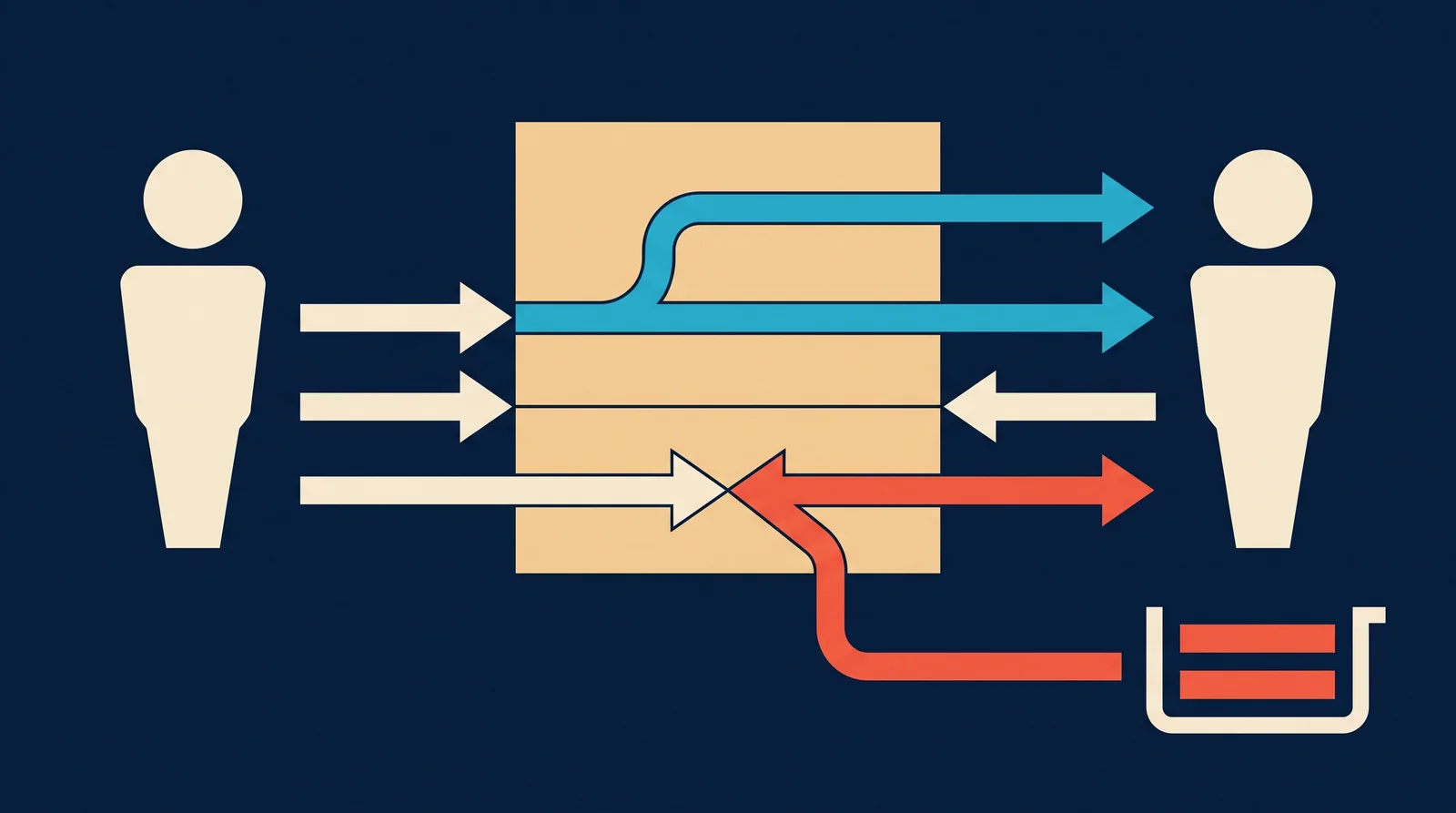
A working day
Consignments are booked in the morning, and the first real problem is usually a rate, because a customer wants a price for a movement you have never made and the answer depends on weight, on the volume the carton actually occupies, on where it is going, and on what the return will cost if it comes back. Then a pickup is late, a consignment is refused at the door, one account wants a bill per consignment while another wants a weekly one, and there is cash in a bag that the office has been told about by phone. None of that is technically difficult. What is difficult is that every consignment is a separate object, and the only question worth answering — which of today's movements are finished, and which are still somebody else's problem — is the one that lives in a person's head until they stop answering the phone.
How NoxOrigin fits this business
Every business runs the same sequence, from first contact to money in. NoxOrigin keeps each step tied to the last: Customer → Opportunity → Quote → Project → Work → Invoice → Payment.
The steps are the same. What changes is the words you use for them, the pressure at each one, and who is responsible for it. This is how it reads for logistics & courier.
Shipper or account
Customer → Opportunity
The person who handed over a parcel once is not a relationship, and the office that sends a fixed number of consignments every week is. Treating both as pipeline fills the list with one-offs and gives the contracts that actually carry the business the same attention as a walk-in enquiry. The record that earns its place names the shipper, what they send, roughly how often, and what was last agreed about how they get billed.
Rate for a consignment or a lane
Quote
This is the step the trade's own shape makes hard, and it is hard because the rate belongs to the consignment rather than to the customer. What you charge depends on the weight, on the space the carton occupies, on where it is going, and on what happens if it comes back — so a customer quoted a flat rate has been quoted something you have to be able to defend later. That has to be a priced quote with line items, because the conversation about why this one cost more than the last one happens weeks afterwards, to somebody who was not there.
The consignment
Project
Once a movement is agreed it is a record in its own right: the shipper, the pickup and the drop, what is inside, the weight and the volume, and a promised time. It has to hold that for several hundred at a time without any of them borrowing another's money, because a consignment is not a customer, and two of them for the same customer are still two separate things to bill, age, and chase.
Pickup, transit, and delivery attempt
Work
The work on a consignment is the handling between the two points, and the part that matters is the attempt: who tried, when, and what happened at the door. A failed delivery has to become a record with a reason and a time on it rather than a call to the office, because the reason is what tells you whether to re-attempt, redirect, or return — and a note saying the customer was not available, written on a docket three days later, settles none of them. What is not here is the vehicle and the person: NoxOrigin holds no vehicle record, no driver roster, and it does not plan or optimise a route.
Consignment invoice
Invoice
Freight is invoiced per consignment or per period, and both are documents with a tax treatment that somebody will check. The invoice has to name the movements it is billing rather than describing a month in words, because the shipper reconciles it against their own record of what they sent — and a difference discovered at month end is a week of somebody else's time spent proving a consignment existed at all.
Collection on delivery
Payment
Cash on delivery is the reason this trade's money is late, and the reason is structural: a rider accepts notes at a doorstep for an invoice that will not be raised until the consignment is billed, so the collection arrives first and the payment record second. They are not the same record. What was taken is a receipt against the bill it will settle, it remits on its own schedule, and until both halves are recorded the largest number in the business is a figure in somebody's bag.
Carrier economics
Reports
What a consignment earned is knowable. What a route or a rider earned is not, because there are no vehicle hours and no driver records to divide the day by. The honest reports are the movements by shipper, delivered against attempted and returned, and quoted against collected — which is also the only way to notice that the account sending the most consignments is the one being paid worst.
What changes
What is different by next week.
The cash taken at a door is recorded as a collection against the consignment and separately from the invoice it will settle, so the remittance becomes a check rather than a discrepancy nobody can explain.
Rates are quoted per consignment with line items, so the movement that cost more than the one before it can be explained from the record instead of from whoever is still in the office.
The shipper that sends consignments every week is distinguishable from the one-off, and only the first is worth a rate conversation and a follow-up at all.
A shipper who settles on the twentieth is a dated promise on an aged balance, and the difference between the cash you are holding and the money you have been paid becomes a number rather than a feeling.
Who does what
Different people need different parts of the same information.
Everyone is looking at the same information. What changes is which part of it they are responsible for.
- Owner / operations headDecides which movements to take and at what rate, and reads the day's economics by shipper rather than by how busy it looked.
- Dispatch and bookingBooks the consignment with the details that make a handover possible, agrees the rate, and keeps the promised times honest.
- Rider / delivery agentAttempts the delivery, records what happened at the door, and takes and records the collection when the consignment is cash on delivery.
- AccountsBills the movements, reconciles the cash remitted against what was collected out in the field, and works the outstanding balances by age.
What software should not decide
NoxOrigin keeps the facts. You still make the decisions.
Keeping the facts in one place ends the argument about what happened. It does not make the decisions that were always yours to make.
- Whether to quote the rate that wins the consignment or the one that survives it. The lower rate is easier to quote and impossible to defend when the return leg is being paid out of it.
- How many attempts a consignment gets before it goes back. Persistence wins deliveries and costs days; returning early saves the day and loses the customer.
- Whether to keep an account that sends volume on terms which make the cash arrive late, or move it to a paid-in-advance basis and risk the volume going elsewhere.
- How much notice a shipper gets that their consignments are running late, and who is allowed to decide that a delay is not worth announcing.
- Whether a consignment that comes back is charged, and to whom the return leg is billed. That is decided once, informally, and then defended for years.
Free tools
What this trade tends to ask, answered with a calculator.
Quote estimator calculator
What a movement or a lane earns once its cost and margin are priced honestly, worked out before the rate is quoted rather than discovered afterwards — including the return leg nobody priced on the first attempt.
Payment follow-up planner
The shipper balances that were collected out in the field and have not been settled, bucketed by age and ranked as a worklist, with any recorded promise surfaced against today's date.
Where to look next
The product areas this depends on.
Customers & CRM
The shipper account and the rate conversation on one record, kept distinct from the consignment that happened to walk in once.
Quotation and invoice
The rate quoted per consignment or per lane, and the invoice that names the movements it is billing.
Payment promises and ageing
The balance where cash was collected in the field and has not yet remitted, aged, with any promised date attached.
Reports & Economics
Movements by shipper, delivered against attempted and returned, and quoted against collected.
Before you look at pricing.
Is this a dispatch and fleet management system with route planning and driver tracking?
No, and it would be misleading to let the word consignment imply otherwise. NoxOrigin holds no vehicle record, no driver or fleet roster, no mileage and no fuel record; it does not plan, sequence, or optimise a route; and it does not draw a map showing where anything is. Following a parcel on a map is a routing product and a good one, and it is not this. What is here is the commercial and service side of a movement: who sent it, what it was agreed to carry for, what happened at the door, what was billed, and what was collected.
Cash on delivery — is the cash a rider collects the payment?
It has to be recorded as one, and it is a different fact from the payment, which is the real reason the money in this trade is hard to count. What was taken at the door is a collection against the consignment and against the invoice it will settle; the payment is what has actually been received and allocated against that invoice. Keeping them as separate records is what makes a remittance from the field checkable instead of a disagreement at month end. There is no rider wallet and no settlement run to automate — the collection is recorded, and the remittance is a payment against the bill.
One customer wants their consignments billed together at the end of the month. Is that possible?
Yes. The consignment is the unit of work, not the unit of billing. Movements are billed per consignment or per period against the shipper record, and the invoice names the movements it covers, so a monthly invoice and a single-consignment invoice are the same kind of document over a different span. A part payment with a date promised against it is a different fact from a part payment, and only the first of those is useful when the month is being reconciled.
Our rates move constantly — distance, volume, and what the return costs. How is that handled?
As a new quote raised against the same movement rather than an edit to the rate that was already agreed, so the original survives as what the customer accepted and both remain visible. There is no change-request record, no milestone record, and no deliverable record in the product. On the costing side, be straight about a limit: there are no vehicle hours and no driver records, so what you can read is what a movement earned against what it was billed and collected for. What a route or a rider's day cost is not answerable here.
Does it handle our statutory documentation and return filing?
No. NoxOrigin prepares invoices and reports, and it files nothing, generates and transmits no statutory document, is not certified for any purpose, and is not a substitute for the tools and the adviser that do that work. Nothing in the system should be read as satisfying a regulator. What a consignment is required to carry by way of documentation is a question for your own adviser, and it is worth settling before the trade grows rather than after the first time it is asked.