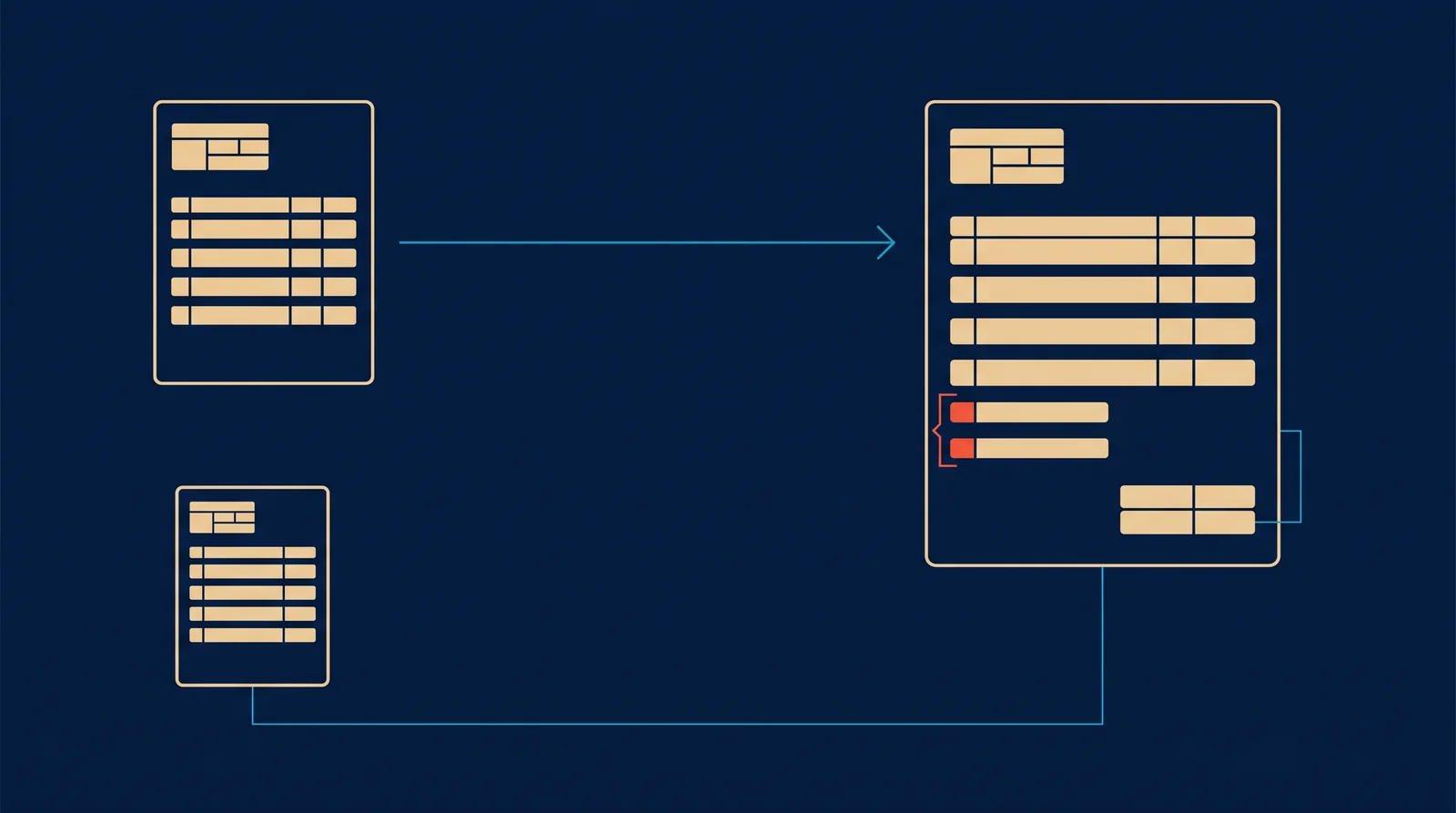
A short supply, a substitution, or a return becomes a visible line on the order it belongs to, with the quantity and the reason on it, instead of a notebook entry that nobody reads before the next season.
Textile & Garment Traders
Fabric merchants, cut-piece suppliers, and garment trading houses where the customer specifies in metres, cuts, or pieces, the rate card is renegotiated with every market move, and the difference between a good month and a bad one is what was bought at what rate and what has actually been paid for.
The problem
A trader's gross margin is the gap between a rate card that is never still and a customer who buys in quantities that do not round. The rate is set against a market that moves, the customer specifies in metres or pieces or a size run, and the arithmetic of what was quoted against what was invoiced against what has been paid is spread across a rate card, a purchase register, and a memory of what the last buyer was given. On top of that sits the uncomfortable part of the trade: a run where the medium did not move, a lot that did not match the sample, a piece count that came back one short of the agreed quantity. Those are real events with real quantities attached, and in most shops they are settled in a notebook and a conversation. Then there is the customer who orders again next season and cannot remember that the last run was short, because the record of it was never anywhere they could reach. What makes this trade different from a factory is that nothing is made here — the order is bought, cut by someone else or not cut at all, and the trader's exposure is price, quantity, and collection.
A working day
The day is a market moving under a book of orders that were quoted last week. Early on it is enquiries: a buyer wants 62 metres of a particular fabric, then wants to know what 200 costs, and the answer depends on a rate that changed twice since the enquiry came in. Then the quantity question, which is the real work: pieces against cuts against metres, a size run that does not balance, and a buyer who wants the shortfall absorbed rather than invoiced. Mid-day, something arrives from the mill or the job worker and the count has to be checked against what was ordered, because the difference is money and the argument about it will happen in a week, not now. A return or a quality complaint is a credit decision with a quantity attached, and who takes it is a judgement about the relationship rather than a rule. Month end, the number that matters is not the sales total — it is which customers quoted at last month's rate are now carrying an invoice nobody has paid, because that is where a moving rate card turns into a collection problem.
How NoxOrigin fits this business
Every business runs the same sequence, from first contact to money in. NoxOrigin keeps each step tied to the last: Customer → Opportunity → Quote → Project → Work → Invoice → Payment.
The steps are the same. What changes is the words you use for them, the pressure at each one, and who is responsible for it. This is how it reads for textile & garment traders.
The mill, job worker, or supplier behind the buyer
Customer → Opportunity
A buyer has to become a customer record with a name, a city, and a person who can be called, because a customer who ordered a size run last season is the customer who orders it again and the next quote depends on what they took. The same record carries the suppliers the trader buys from, since the buy rate and the sell rate live on the two sides of the same trade. Merge policy is a setup decision: duplicate detection flags candidates and a person reviews them, and nothing merges on its own, because two trading houses with a similar name in the same market are genuinely different customers.
The order priced off the live rate card
Quote
The quote is the fabric or the garment, the specification, the quantity in the unit the customer actually buys in, the rate, and the terms, so that a change of quantity, a change of fabric, or a revision when the market moved is a new quote rather than a line somebody edited in the rate card. A trader who holds a quoted rate until the customer confirms has made a real decision about margin, and the record is where that exposure becomes visible. There is no e-signature and no contract editor, so a written order acknowledgement stays where the trader keeps written acknowledgements.
The order and what was actually bought to fill it
Project
Once the quote is accepted the order becomes the live record with the specification, the quantity, the unit it is sold in, and the terms it was accepted against, so a substituted fabric, a changed quantity, or a short delivery is a visible change and not a quietly netted difference. A change after acceptance is a new quote on the same order. There is no change-request record, no milestone record, and no deliverable record, and nothing here tracks a dye lot, a batch number, or a colourway.
The buy, the count, and the return
Work
The work is the purchase, the piece count against the ordered quantity, the return, the quality complaint, and the job-work dispatch — recorded against the order so the next season's conversation with the same buyer starts from what actually happened rather than from what was hoped. This is the only place the operational friction of a sale is visible, and it does not reach the customer's bill unless somebody puts it on one. There is no timesheet record and no payroll module, so the hours spent chasing a count are not measured here.
The bill in the unit that was sold
Invoice
The invoice carries the quantity in the unit the customer buys in and the rate that was actually agreed, with any short supply, substitution, or return as its own line rather than absorbed into a total. An invoice and a payment are different records, and in this trade the distinction is the whole mechanism: a garment trader who has delivered and not been paid has stock gone and cash not arrived, which is a different position from a garment trader who has not invoiced yet, and the two need to be readable as separate states.
Part payments from a buyer who settles on their own clock
Payment
Money arrives against a specific invoice, in a mix that includes an advance, a part payment against a running order, and a balance at the end of a delivery, and the allocation matters because a buyer who pays something is not a buyer who has paid. Recording each payment against the invoice is what lets the trader see which orders closed and which are still carrying stock, and NoxOrigin holds paid as a projection of allocations rather than a flag somebody sets, so an invoice with a payment against it is a fact rather than an assertion.
Season close and the honest book
Reports
Quoted against billed against collected by customer, by fabric or garment line, and by market, with the number that matters being which buyers are still carrying an invoice quoted at a rate the market has since moved past. There is no margin-per-rate-card calculation here, because the cost side of that calculation is the trader's own purchase register and nobody else's system. Short supplies, returns, and credits that were never settled need to be records somebody raised, because none of them appear in a sales figure on their own.
What changes
What is different by next week.
A change in quantity, fabric, or rate becomes a new quote on the same order with its own line, so the buyer can see exactly what the change did to the price rather than only to the total.
The unit of sale is written on the quote and the invoice, so metres, cuts, and pieces stay distinguishable and a run that was sold in pieces is not later read as a run sold in metres.
The customer, the market they buy in, and their last size run go on the record together, so next season's enquiry starts from what this buyer actually took rather than from a blank record.
The person who agreed the rate, the person who accepted the short supply, and the person who wrote off a difference are three named people on the same order, which is what makes a disputed quantity reviewable instead of a matter of memory.
Who does what
Different people need different parts of the same information.
Everyone is looking at the same information. What changes is which part of it they are responsible for.
- Sales and counterTakes the enquiry, works out the unit and the rate, quotes against the current card, and records the specification and quantity the order was made on.
- Purchase and storesRaises the buy against the order, checks the count against the quantity ordered, and reports any short supply or rejected lot — without holding pricing or credit permissions.
- Accounts and collectionsRaises the invoice in the unit sold, records each payment and advance against the specific invoice, and works the buyers carrying the longest outstanding.
- Proprietor or managerDecides the rate posture for a season, which orders to hold a price on, and which difference to absorb rather than re-invoice.
What software should not decide
NoxOrigin keeps the facts. You still make the decisions.
Keeping the facts in one place ends the argument about what happened. It does not make the decisions that were always yours to make.
- Whether to hold the quoted rate when the market moves before the customer confirms. Holding it protects the order and costs margin if the market has gone the other way; re-quoting is honest and is the conversation where a long-standing buyer decides whether you are still their trader.
- Whether to absorb a short supply or re-invoice the difference. Absorbing it is a small loss that keeps the relationship and the next season's order; re-invoicing is correct on paper and is exactly the moment a buyer starts shopping around.
- Whether to substitute a fabric when the ordered one is out of stock. Substituting keeps the delivery date and risks a rejection on quality grounds; refusing keeps the specification and loses the week. There is no substitution-tracking record here, so the decision and its reason are yours to keep.
- Whether to sell to a new buyer on credit. Credit grows the book quickly into an unknown, and a garment trader's stock is its working capital, so an unpaid invoice here ties up the money needed to buy the next run.
- Whether to chase a buyer who has paid something and gone quiet on the balance. Chasing a part payer protects the cash; letting it sit keeps goodwill, and the part payment is often a signal that something went wrong with the delivery rather than with the buyer's intention to pay.
Free tools
What this trade tends to ask, answered with a calculator.
Markup vs margin calculator
Price a fabric or garment from your buy rate at the target you actually intend, and see the margin that rate really carries — since a rate card written as a markup and read as a margin is where a good month quietly stops being one. A calculation, not a rate card that reprices itself.
Receivables aging calculator
Where the season's outstanding sits by age, so the buyers who paid in full are distinguishable from the ones who paid a part and went quiet. A calculation, not a collection record.
Where to look next
The product areas this depends on.
Commerce
Fabric and finished-goods stock across the godown and the counter, with receiving, transfers, low-stock signals, and counter billing against the rate card.
Quotes, Billing & Finance
The order quoted in the unit the customer buys in, with any short supply, substitution, or return as its own line on the invoice.
Customer Payment Tracking
Advances, part payments, and balances each allocated to the invoice they were made against, with promises recorded against the date they were given.
Reports & Economics
Quoted against billed against collected by customer and by line, so the buyers still carrying an invoice quoted at a stale rate are findable.
Before you look at pricing.
Does it handle cut-to-order, patterns, or job work?
No. There is no cut-to-order or pattern record, no job-work or piece-rate record, and no manufacturing or bill-of-materials capability. NoxOrigin is not a garment ERP and it does not plan a factory. What it does is record the customer, sell in the unit the customer actually buys in, invoice it, and allocate the payment — the commercial side of a trading business, with the cutting and stitching left where they already are.
Can it track a batch, a colourway, or a size run?
No. There is no batch or colourway tracking, no dye-lot or lot record, and no size-grade or unit-of-measure conversion. The unit you sell in is written on the quote and the invoice as you enter it, so a run sold in pieces stays in pieces, but a system will not convert between metres, cuts, and pieces for you, nor tell you which size sold through and which is still in the rack. Stock of fabric and finished goods, with receiving, transfers, and low-stock signals, is Commerce; a lot number stays on your own mill and job-worker paperwork.
What happens when the customer changes the order after it is accepted?
It becomes a new quote on the same order. There is no change-request record, no milestone record, no deliverable record, and no contract editor, so a change in quantity, fabric, or rate is a second quote with its own line and its own rate, and the original stays readable underneath it.
How does it handle money coming in against an order?
An invoice and a payment are different records, and paid is a projection of the allocations you make rather than a flag you set. An advance, a part payment, and a final balance each attach to the specific invoice, so an order where money has partly arrived is distinguishable from an order that is settled — which is the difference between stock still being financed by you and stock being free.
Does it do GST filing, expenses, or purchasing?
NoxOrigin does not file GST returns, does not generate or submit e-invoices or e-way bills, does not record TDS or TCS, and does not determine place of supply or hold any bank connection or credentials. Purchasing and stock movement are in Commerce, which is part of NoxOrigin rather than something a plan adds or withholds, so fabric and finished goods can be bought and received on any plan. The expense side is the other way round: an expense claim, an approver, and a reimbursement are a Nox-Billings capability, scoped and quoted separately, and Commerce holds none of them. There is also no payment gateway, no card on file, no auto-debit, no dunning sequence, and no scheduled invoice generator, so every invoice and every payment is raised or recorded by a person.