Project profitability software that shows where the money actually went.
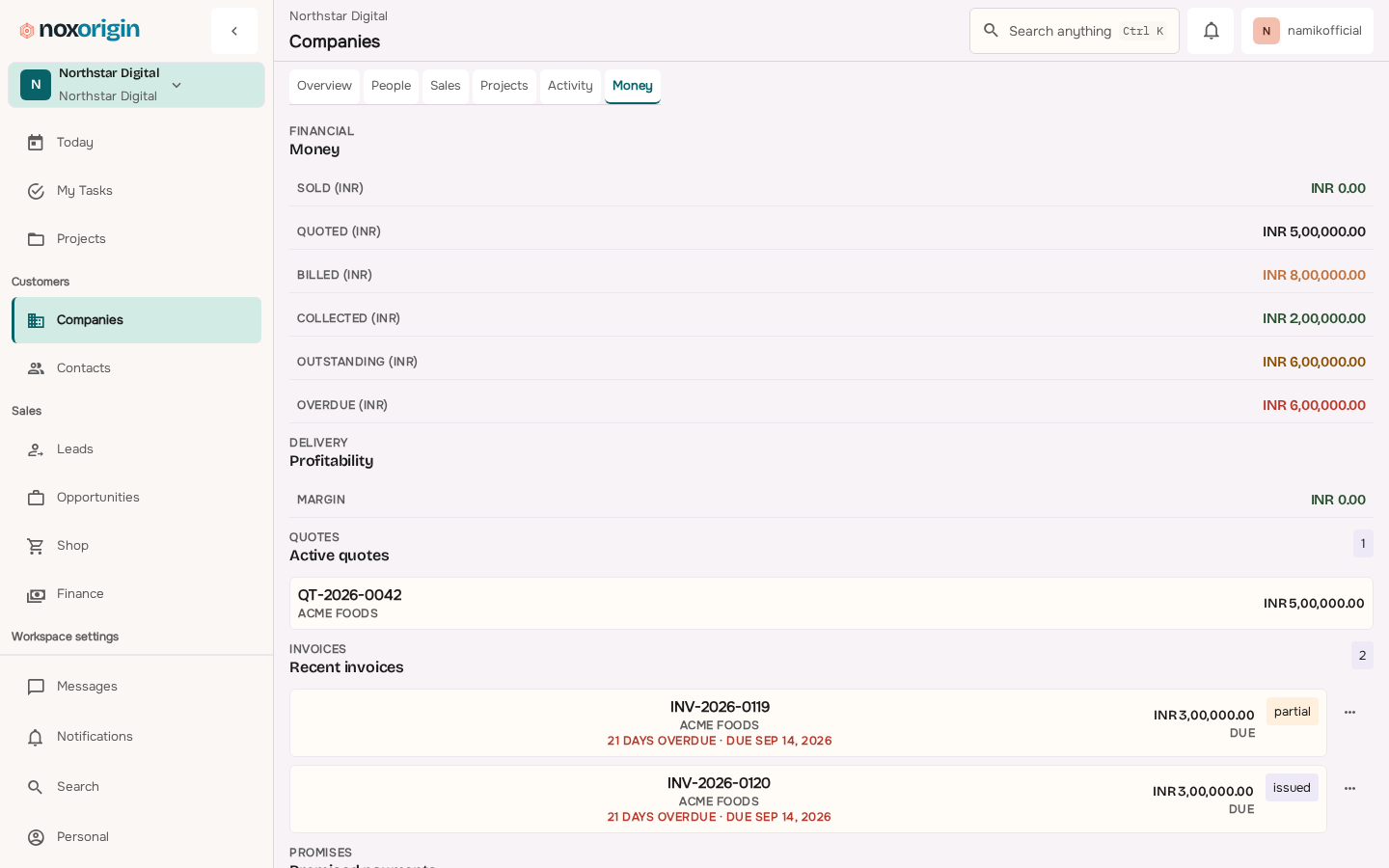
Every NoxOrigin project carries what was quoted against what was billed, so the commercial outcome can be read against what was delivered. Agencies, consultancies, studios, and service firms use it to find unbilled scope, revisit bad scoping, and stop guessing at which engagements were worth taking.
What the number looks like as it is computed
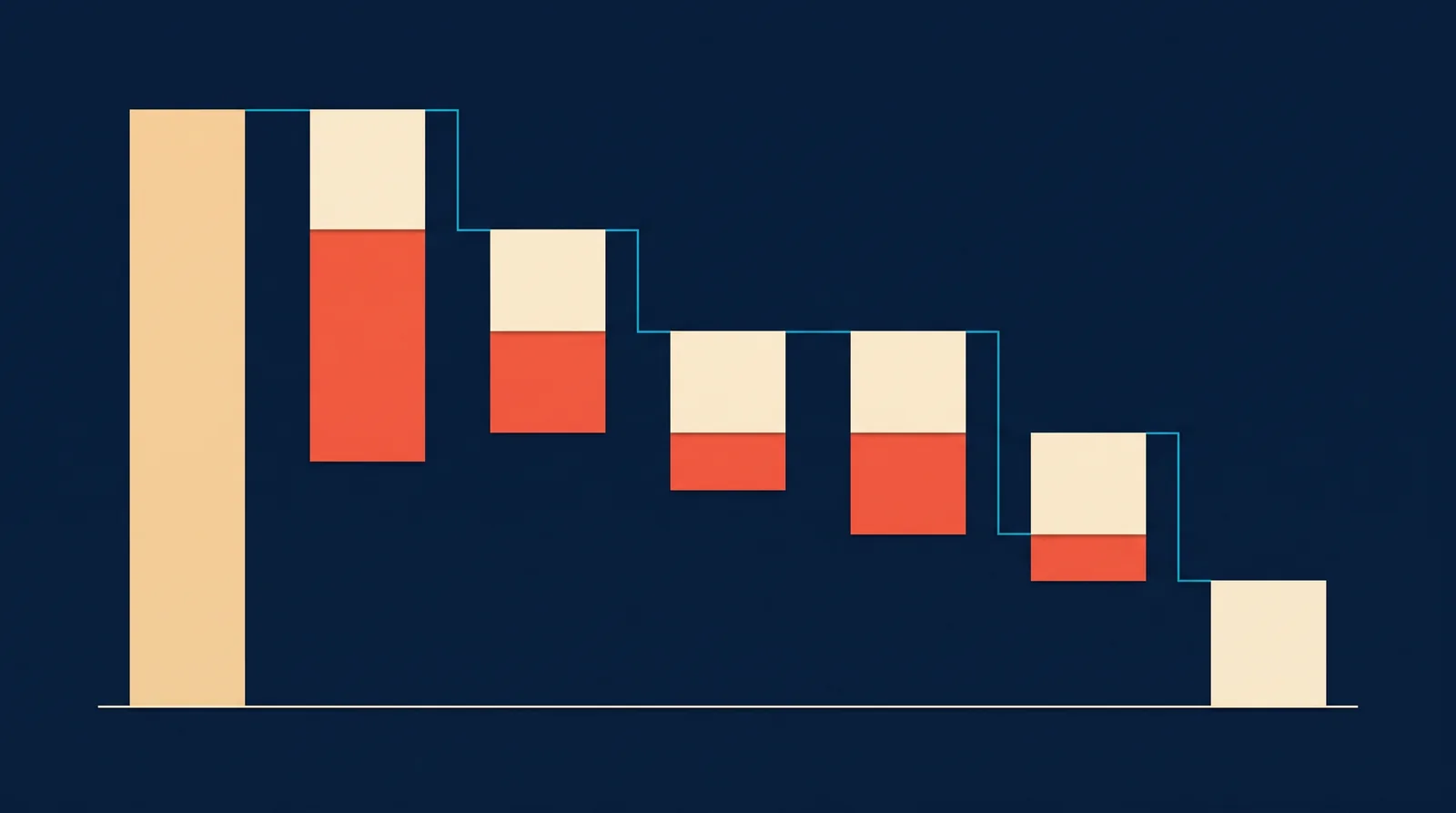
A project does not lose money in one step. It loses it as value is removed: hours that were never quoted, materials that overran, and a change that was delivered but never re-quoted. Each of those has to be visible as its own step, or the total tells you a project was unprofitable without telling you which decision caused it.
Why a good month can be a bad quarter
Revenue arrives reliably and means very little on its own, because it counts money that was quoted, money that was billed, and money that actually arrived as if they were the same fact. Collapse those three states into one number and the questions a business needs answered stop being answerable.
Delivered work that was never invoiced
Nobody loses the work. It simply stops being visible, so it is written off as churn when it was actually a billing gap with a client attached.
A project that quietly lost money
The team remembers it as a success. Quoted against billed for the same scope shows the gap, and per project it becomes a scoping fix rather than a vague instruction to be more careful.
One project cannot tell you anything
A single project is an anecdote. Read across a quarter of them, the same pattern appears: the same under-scoped work type, priced the same way each time.
A margin number nobody can defend
If the figure cannot be traced to the quote, the invoice, and the payment, it gets re-checked in a spreadsheet before anyone repeats it — which defeats the point of reporting it.
How a project becomes a readable commercial outcome
The same six steps an agency already runs, except the numbers survive the project.
Open the project from the record that caused it
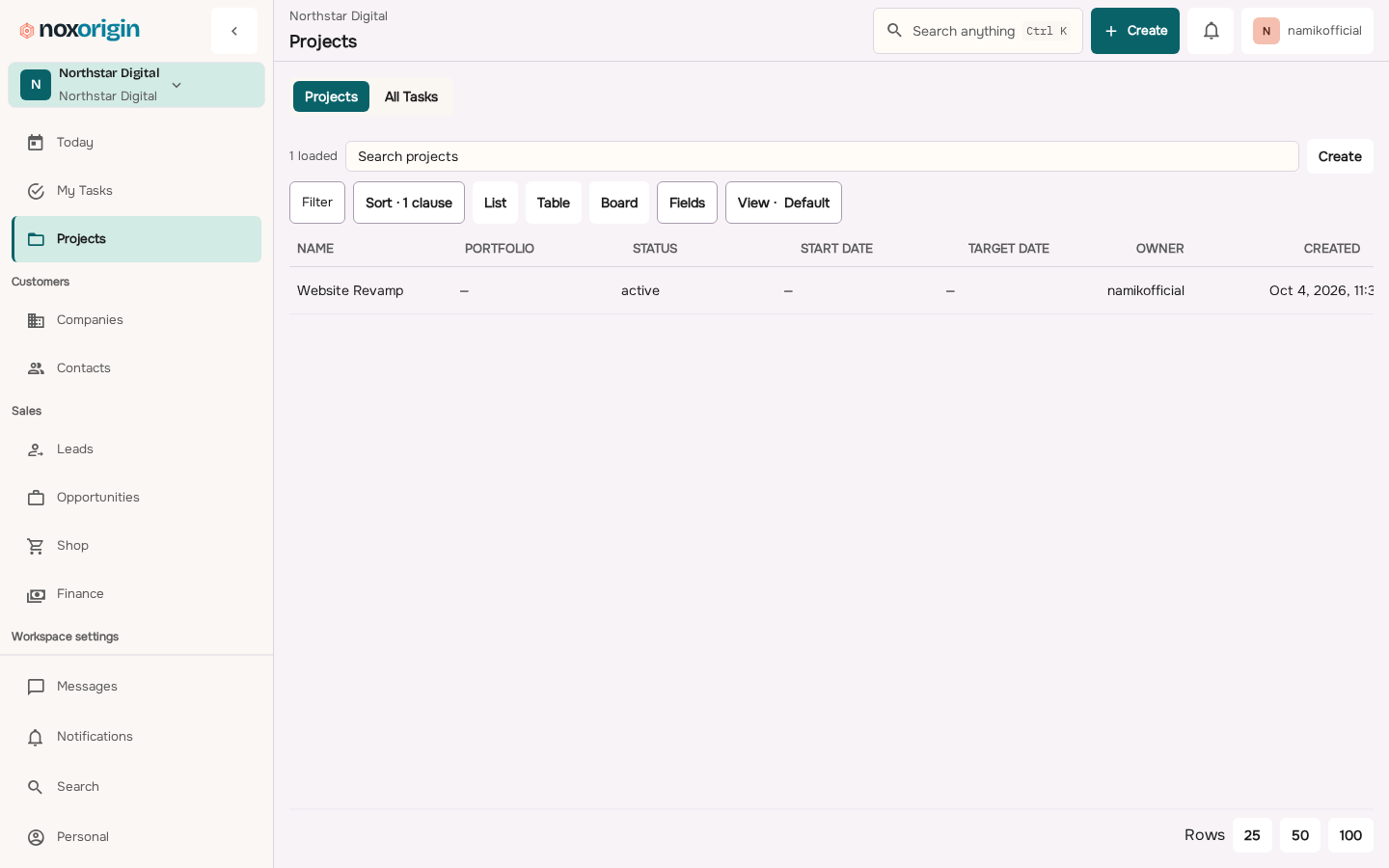
A won opportunity or a standing client becomes a project carrying the client, the scope, and the commercial history with it.
Quote the whole scope
Economics are only as good as the quoted record. A quote that covers one milestone makes every later margin number provisional.
Deliver against dated tasks
Status is assembled from tasks that are actually done, rather than from the most optimistic person in the room.
Invoice what was finished
Finished work reaches billing because delivery and finance read the same records instead of exchanging summaries.
Read quoted against billed
The gap is agreed work that was never invoiced, which is a solvable problem with a client and a project attached.
Discuss the pattern, not the anecdote
A project that was badly scoped becomes a scoping conversation for the next similar job, which is what makes it worth reviewing at all.
Read the number honestly
Four things worth deciding before the first profitability review, each of which decides how much the figure is worth.
Cost data is an obligation, not a switch
Margin is only as good as the costs put against it. Be explicit about which costs are actually recorded; a margin view built on partial costs looks authoritative and is not.
Definitions drift quietly
Agree what counts as billed, what counts as collected, and where a partially paid invoice sits before the first report circulates. A definition changed mid-year makes two reports incomparable.
Accountability is not the same as utilisation
Assignments and status show who owned the work. They are not a measure of how many hours anyone spent, and should not be presented as one.
A report nobody trusts gets re-checked
Resist producing a bespoke figure for one caller’s preferred story. A number traceable to source records is worth more than a number tuned to be persuasive.
Project economics and client money, in the same system
The same records answer both questions, so a project conversation and a collection conversation are not separate exercises.
Project economics are not a premium tier
Starter is ₹800/month and already includes project economics, with 10 active projects and 1,000contacts. Growth raises that to 50 active projects and 10,000 contacts; Agency carries full project economics across 250 active projects and 3 workspaces.
Project profitability questions
What does project profitability software actually show?
In NoxOrigin it shows what a project was quoted against what was billed for it, read per project rather than per year. That makes a badly scoped engagement visible as a pattern across projects instead of one unpleasant recollection, and it makes agreed work that was never invoiced findable — the most commonly missed loss in the chain.
Is this cost accounting?
No, and the distinction matters. Project economics compare quoted value against billed value for the work delivered — a commercial view of your own projects. How much of your cost base is genuinely recorded affects how meaningful the margin read is, and a margin view built on partial costs is worse than none, because it looks authoritative.
Does NoxOrigin track time so I can cost each project?
Not as a delivery timesheet. Projects carry status, dates, and members, and tasks carry an owner, a due date, and a priority — which tells you who was accountable and what completed. Shift time tracking exists for counter staff, not for cost-capturing delivery hours. If billable-time capture is the thing you are buying, say so early, because that is a different requirement.
What if we do not raise quotes in the system?
Then there is no quoted value to compare against, and the profitability question cannot be answered from NoxOrigin. Quoted value is only useful if quotes are actually raised as records, so treating that as a process fix rather than a reporting problem is the right order of work.
Can I trace a project number back to where it came from?
Yes. Every figure has a path to the underlying client, project, invoice, payment, or operational record. That is the difference between a report you trust and one you re-check in a spreadsheet before repeating it to anybody.
Does this replace my accounting package?
No. Project economics, client money, receivables ageing, and operational reporting read from the NoxOrigin records. Statutory accounting, ledgers, and filing stay with the tools built for them — this is where the data they consume comes from.
Find the projects that were delivered and never invoiced.
Bring a quarter of quotes and invoices, or start with one project. We will map what NoxOrigin reports per project and which numbers still depend on data you record elsewhere.