The fault found on site that was not in the callout becomes a second priced quote on the same property, instead of an addition to a number the customer has already agreed to in principle.
Electricians, Plumbers, and Home Services
Owner-run electrical, plumbing, AC, and appliance-repair businesses where the person who took the call is often the person who will stand in the kitchen at seven in the evening, and where a large share of the week is properties that have been worked on before.
The problem
The job is at an address, and that changes everything about how the work gets recorded. There is no shop to bring the customer to, so the estimate happens in a hallway and the customer has no way to check the price of a consumer unit against anything. A callout fee is a quote and a visit at the same time, which means the first visit has to be able to be priced, billed, and closed before the work is even understood. Then there is the fault that comes back: the same complaint at the same address weeks later, handled as a fresh call, with no memory of who was there last time or what was actually replaced. The property, not the person, is the record that matters, and its history lives in a diary, a set of photographs on a phone, and whichever technician happens to remember.
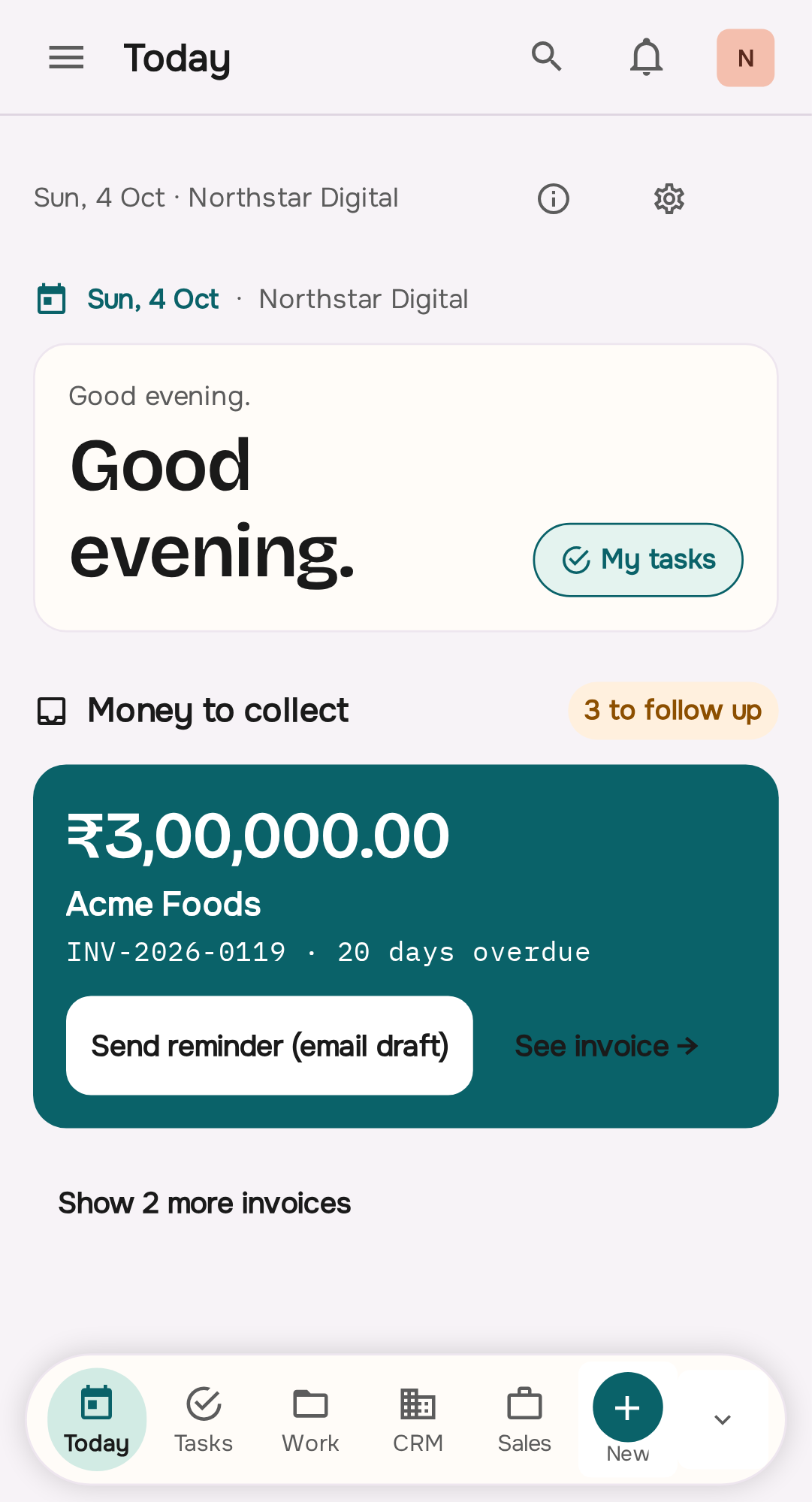
A working day
The day is a list built in the morning from calls that came in overnight, and it changes before it starts because half of it is a promise of a window rather than a time. The first job of the day decides whether the rest of the list is realistic. Somebody opens a site, finds that the fault is not the one that was described on the phone, and the original price is now a starting point. Materials come off the van, which means the stock is on a shelf in a vehicle rather than in a warehouse. Two jobs overlap because the first one ran long, and the customer at the second address has been waiting since morning. Then the evening brings the calls that were missed during the day, and the day gets longer rather than closing.
How NoxOrigin fits this business
Every business runs the same sequence, from first contact to money in. NoxOrigin keeps each step tied to the last: Customer → Opportunity → Quote → Project → Work → Invoice → Payment.
The steps are the same. What changes is the words you use for them, the pressure at each one, and who is responsible for it. This is how it reads for electricians & home services.
The call and the address
Customer → Opportunity
An enquiry for a fault is not yet a job and should not be treated as one, but it has to be held against a real address with an owner, because a call that comes back in a week should not start from nothing. The property is where the work lives, and the person who called and the person who pays are often not the same person.
Callout fee and visit
Quote
The attendance charge is a small priced piece of work with its own line items, not a courtesy, and it has to be quoted before the visit so that the customer knows the number before the van arrives. The reason for the visit is written in the customer's own words, because the description on the phone and the fault on the wall are frequently two different things.
Approved work at the address
Project
What was agreed at the doorway becomes the live job with an owner and an expected time, so the technician works from what the customer approved rather than from what was discussed while the customer was not listening. There is no change-request record and no e-signature, so anything extra found on site is a new quote against the same property, agreed before the work goes on.
Work done and materials used
Work
The fault found, the fitting replaced, the parts consumed off the van, and the customer left with a system that works — all of it belongs to the same job. There is no timesheet record and no payroll module, so travel and labour time are not captured against the job; what is recorded is the work and what went into it, and the hours figure is yours to keep.
Bill for the visit
Invoice
The callout fee and the work are separate lines on the same bill, and the bill is raised at the property while the customer is standing there and can see the number. An invoice and a payment are different records, so the bill can exist before the money moves — which matters when the customer says the neighbour's rate was lower and will decide in the morning.
Money at the door and after
Payment
Part payment at the door and the balance later is ordinary in this trade, so the payment records against the specific job rather than the day's total, and a promise to pay the rest gets a date and ages like one. UPI to a person and cash in a hand are both payments, and both need to reach the job they belong to before the van is repacked.
Whether the business is actually profitable
Reports
What decides whether the van keeps running is quoted against collected by job type, and the honest version of that is uncomfortable: some of the calls that keep the diary full are calls that never cleared a margin once travel and the unpaid second half of the day were counted. Quoted value sitting in the van for a month is not revenue.
What changes
What is different by next week.
The reason for the visit is written down in the customer's words before the van leaves, so the difference between what was described and what was found is a record rather than a memory that changes by evening.
Cash, UPI, and a promised balance each land against the job they belong to, so the day reads as a set of settled jobs rather than one total that has to be re-split at night.
A customer who owes the remainder has a name, a date, and a job attached, so the follow-up is a queue someone works rather than a number that gets smaller by accident.
The technician who attended, the person who agreed the extra work, and the person who took the payment are three named people on the same record, which is what makes a disputed visit defensible later.
Who does what
Different people need different parts of the same information.
Everyone is looking at the same information. What changes is which part of it they are responsible for.
- Owner / estimatorPrices the callout, decides what a visit is worth when the fault is not the one described, and decides which kinds of work the business should stop taking on.
- DispatcherBuilds the day's list, reshapes it when the first job runs long, and is the person deciding whether a promised window is realistic or a courtesy.
- Electrician / technicianAttends, diagnoses, explains what was found, and either works within what was agreed or stops to get the extra work priced before touching anything else.
- Billing and collectionRaises the bill at the property, records what actually came in, and chases the balances that were promised rather than hoped for.
What software should not decide
NoxOrigin keeps the facts. You still make the decisions.
Keeping the facts in one place ends the argument about what happened. It does not make the decisions that were always yours to make.
- Whether to absorb a small extra to finish the job in one visit, or stop and price it. Finishing keeps the customer and the diary moving and teaches them that the price is a starting point; stopping protects the margin and risks the work going to whoever was ready.
- Whether a job that has already gone wrong once gets priority or gets a firm slot next week. Priority rebuilds trust and costs you a paying customer today; a firm slot keeps the diary honest and may lose the fault altogether.
- How long to hold a callout fee before waiving it for a customer who might have a bigger job later. Waiving it once is a sales cost that is defensible; waiving it every time is the price of every call you did not charge for.
- Whether a repeat fault at the same address is your problem or the previous contractor's. Accepting it is a commercial decision about whether that property is worth having; the record of who was there last time is what lets you make it deliberately.
- Whether a window promised on the phone is held even when the day is already broken. Holding it costs the rest of the list; missing it costs the one customer who was watching the clock and telling other people.
Free tools
What this trade tends to ask, answered with a calculator.
Quote estimator calculator
What a visit actually earns once materials, travel, and the unpaid part of the day are priced in — including the extra fault you have just found and are about to quote in a hallway.
Lead follow-up planner
The calls that came in overnight and did not become a visit on the first attempt, each with an owner and a date. A planning sheet, not a dispatch board.
Where to look next
The product areas this depends on.
Customers & CRM
The enquiry, the address, the person who called, and the person who will pay, with an owner and a dated next action.
Quotes, Billing & Finance
The callout fee, the work found on site, and the bill raised at the property while the customer is standing there.
Payment promises and ageing
The part paid at the door and the balance promised, with a date on the promise and the job it belongs to.
Reports & Economics
Quoted against collected by job type, including the visits that never cleared a margin once travel was counted.
Before you look at pricing.
Is this a field service or dispatch system with technician tracking?
No. NoxOrigin does not schedule technicians, does not track a vehicle, does not route a van, and does not send a customer an arrival notification. What it holds is the commercial spine of the job — the enquiry, the callout quote, the approved work at that address, the materials, the bill, and the payment — and the people and permissions around it.
Does it keep the service history of a property and send automatic reminders?
No. It is not an asset or installed-base register, it does not hold equipment history, and it does not run a service-reminder cycle or a maintenance schedule. The address is where the work is recorded and the customer is who you hold it against; what happened at that address in previous years is a decision your own records have to carry.
Can the technician add work on site without going back to the office?
There is no change-request record and no in-field scope editor, so anything beyond the agreed scope is a new quote on the same job rather than an edit to the original. Whether the technician may raise and approve that quote on site is a permissions decision you make, not a product constraint — quotes, invoices, payments, and discount approvals are separate permissions, evaluated per action, with PIN-based access so an entry carries a person rather than a shared login.
Do you track technician hours and pay them from this?
No. There is no timesheet record and no payroll module, and the work record will not pretend to be either. The work and the materials on a job are recorded; the labour is not, and if technician time is the number you price and staff against, that is a different product.
What about the stock on the van and the parts in the cupboard?
Stock, purchasing, receiving, transfers, adjustments, and low-stock signals live in the Commerce area, which is enough to know what is in the store and what is running out. There is no van-level consumable tracking tied to each job, no purchase-order system inside the platform, and no expense or payroll reporting here — expenses are a Nox-Billings capability, and purchasing is Commerce.