POS software for a multi-user counter, where every action has an owner.
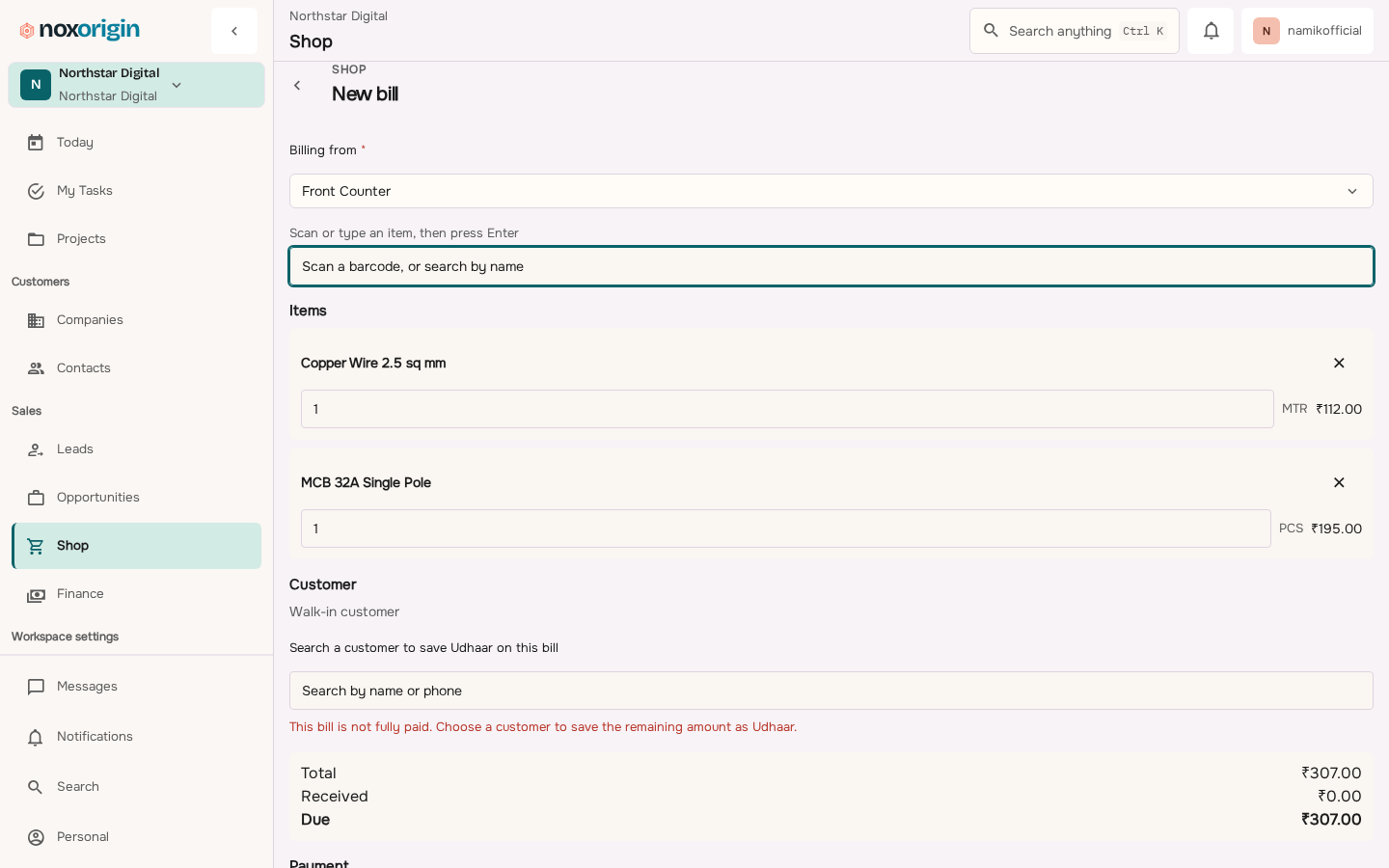
NoxOrigin treats a shared till as the accountability problem it is: separate staff identity on shared hardware, GST-compliant invoices built as the sale is rung up, discount approvals instead of phone calls, cash, UPI, card, and mixed payments recorded as methods, and a shift close that compares counted cash with what the system expected.
What a shared counter actually costs you
None of these are software failures. They are the normal result of running a device that several people use with one login and no reconciliation step.
One shared login for the whole shift
The day’s sales belong to an account, so a discount given away, a refund processed, or a manual adjustment made cannot be traced to a person at the end of the day.
Discounts are the owner’s phone call
Reducing a price takes a decision that is not written down anywhere, so the fastest way to serve a customer becomes the fastest way to lose margin quietly.
Takings are a roll of paper
The payment mix is remembered afterwards, so UPI settlement timing and cash in the drawer are reconciled from memory and the difference is absorbed as a rounding issue.
Day-end takes longer than the day
Closing is a reconstruction from slips, memory, and a phone, which is why it gets skipped on busy days and why the month never quite adds up.
A counter shift, written down so it survives the next person
The sequence a shop can adopt without changing what it sells or how it prices.
Give every person their own identity
PIN-based staff access tied to a person record, not a device or a session. This is the step that makes a shift attributable to a human, and it is the one most counters skip.
Ring the sale up against the product record
POS cart with product selection, quantities, and discount application, with the business’s tax treatment applied as the sale is built rather than corrected afterwards.
Let the completed sale move the stock
The balance moves against the warehouse it was drawn from, so on-hand is the result of selling instead of somebody remembering to update a sheet.
Capture payment as a method, not a total
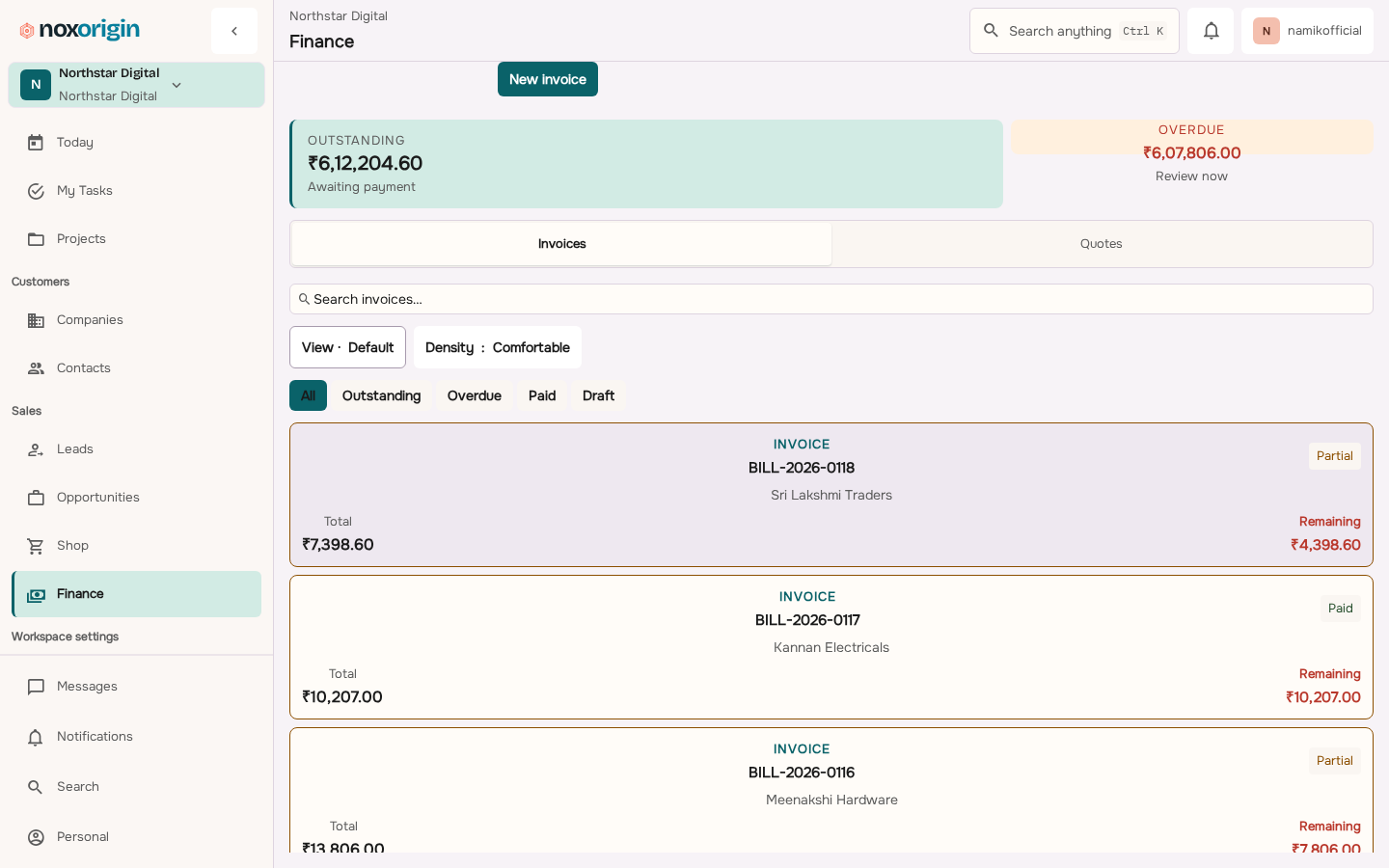
Cash, UPI, card, or a split across methods, with partial payments tracked against the invoice. The day’s payment mix is then a consequence of the transactions.
Route an out-of-policy discount for approval
The counter keeps serving the customer while a manager approves, and the exception is recorded so the owner sees the discount by name rather than discovering it in month-end numbers.
Close the shift and compare
The shift is opened and closed, with counted cash compared against the expected total alongside the payment mix, adjustments, and approvals — so day-end is a comparison, not a reconstruction from memory.
Approvals, day-end, and audit are part of the counter record
These are the surfaces a counter operator and an owner argue about less, because the conversation can point at a record instead of at a recollection.
Where a counter POS is the wrong buy
If any of these describe your shop, say so early — the honest answer is usually a different product rather than a larger plan.
A restaurant kitchen display and KOT flow
Kitchen order tickets and a customer-facing display are listed as planned capabilities rather than shipped ones. If the order has to reach a kitchen printer or a KDS as its own chain, that is a different product and we will say so before you buy.
An omnichannel storefront with a website catalogue
Commerce covers catalog, stock, and counter billing. It is not a web storefront, a marketplace listing system, or an order-fulfilment platform for online sales.
Hardware assurance and cash-in-transit management
Supported scanner and printing capabilities are deployment-specific and thermal printing is assisted setup. Armoured collection, cash logistics, and shift-dispute adjudication are not part of this.
Statutory compliance and e-invoicing
GST invoices are compliant with a tax breakup, and rate plus place-of-supply configuration is agreed during setup. Government e-invoicing and e-way-bill integration are listed as planned, so do not plan a rollout around them.
One workspace first, several counters only when it is earned
Growth is ₹1,600/month or ₹15,000/year with a 30-day trial and 10 users, which covers a counter with a few people on it. Agency is ₹5,000/month with 25 users across 3 workspaces for groups running genuinely separate sites. A dedicated, customer-branded counter deployment is scoped separately.
Counter POS questions
What makes a counter POS different when more than one person uses it?
Attribution. On a single-user counter the till operator is always known, so a shared login costs nothing. The moment two people share a device, the day's sales belong to an account rather than to a person, which defeats the point of a shift record. PIN-based staff access gives each person their own identity on the same hardware, so a shift has one owner and the audit trail is worth reading.
Who can give a discount at the counter?
That is a permission, not a preference. Discounts can be applied inside the transaction with limits, and an out-of-policy discount can be routed to a manager for approval instead of blocked. Counter staff keep serving the customer while the approval becomes an explicit step, and whatever was given away then shows up in the day’s numbers by name. If the only way to reduce a price is a phone call to the owner, expect that path to keep being used — the threshold has to be faster than the workaround.
Which payment methods can be recorded?
Cash, UPI, card, and bank transfer are recorded against the invoice, and a single invoice can be split across more than one method. Partial payments are accepted with the balance tracked, which matters more for B2B counters than for walk-in retail. Razorpay payment links are available on the Growth and Agency plans; a complete payment-gateway suite with settlement reconciliation is a different product.
What happens at day-end?
The shift is closed with a review of what was sold, the payment mix, adjustments, and approvals. A shift is opened and closed, and counted cash is compared with the expected total, so any variance is a recorded result rather than an informal reconciliation at the back of the shop. Day-end summaries and thermal receipt printing are listed as assisted-setup capabilities in the dedicated Nox-Billings deployment, so we confirm which counters use them during rollout.
Does the counter keep working when the internet drops?
Transactions are recorded with offline queues and sync recovery rather than being held hostage to a live connection. We do not make a blanket resilience promise: the behaviour is validated during rollout against your actual counters, devices, and connectivity, because a shop with two bars of signal and a shop with fibre fail differently.
How much does a multi-user counter cost?
NoxOrigin Starter is ₹800 per month with 3 users, Growth is ₹1,600 per month with a 30-day trial and 10 users, and Agency is ₹5,000 per month with 25 users across 3 workspaces. Team members beyond a plan limit are an add-on. If you need a dedicated, customer-branded, or multi-counter hardware deployment, Nox-Billings is quoted separately after the workflow, volume, and hardware are reviewed.
Find out who actually rang that sale up.
Tell us how many people share a counter, what devices and printers are already on the shelf, and how the day is closed today. We will show which parts NoxOrigin covers and which stay manual.