Inventory management software for a small business that sells stock.
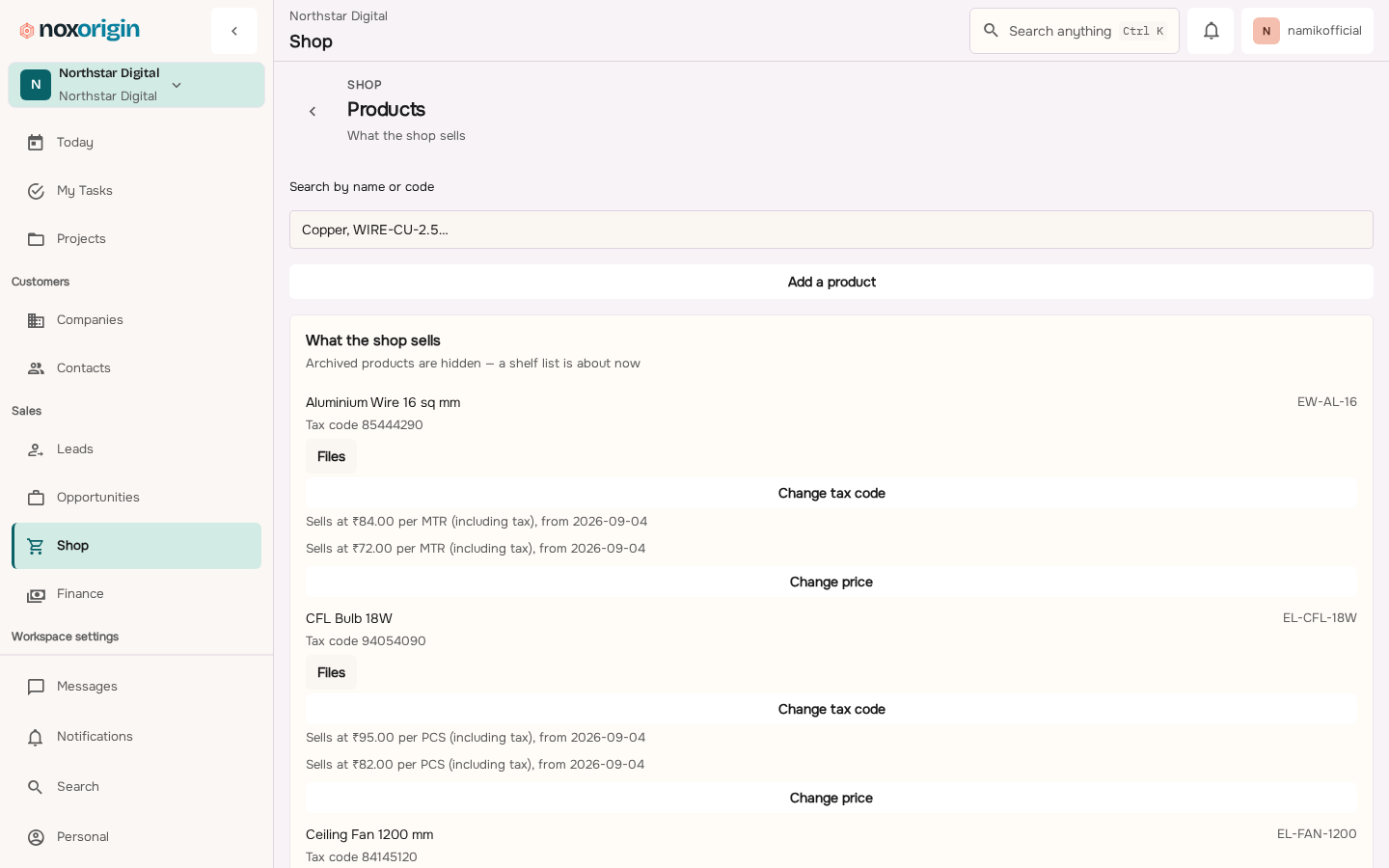
NoxOrigin keeps the catalog, stock balances per warehouse, purchasing, and the counter sale that moves them on one record. A small business in India can count, adjust, transfer, and reorder against real movement — with the invoice, the payment, and the day-end reading the same events rather than a separate set of numbers.
Four failures that are rarely stock failures
Each of these is usually blamed on the stock list, when the actual cause is that the sale, the movement, and the money were never required to be the same event.
The count and the system disagree
Two people count the same shelf on the same evening and get different numbers, because every sale moved a real balance somewhere else and the unrecorded movements cannot be named.
Reordering repeats last season’s instinct
Purchasing is raised from what someone remembers being short, which is usually the item that was short when the previous supplier was slow.
Stock on the shelf has no value record
The quantity is arguable but nobody can say what it cost or what it was sold for, so margin is guessed at and the guess gets treated as a figure.
Multi-site stock is a monthly export
Each branch reports its stock separately, the totals are assembled by hand, and the difference between them is absorbed into whatever else was wrong that month.
How stock, purchasing, and the counter stay connected
Six steps a small trading business can adopt without changing how it buys or how it sells.
Keep the catalog honest first
A product record with no tax treatment, no unit, and no warehouse behaves differently at the counter from one that is complete, and the difference shows up as a mis-bill rather than as a warning.
Let the sale move the balance
When a sale is rung up and completed, the stock position moves against the warehouse it was drawn from. This is the step that separates a stock-aware counter from a till.
Receive what actually arrived
Purchasing is raised as a purchase record against the products and warehouse that need replenishing, and receiving brings the balance in line with what is in the room rather than with what was expected.
Record the movements nobody wants to record
Damage, samples, stock taken for another site, and corrections are entered as explicit adjustments. A count is only as good as the agreed rule for what should have moved.
Reorder against consumption, not memory
The reorder decision follows what the counter recorded moving, with reorder levels and low-stock signals available in the dedicated deployment rather than a forecasting model that assumes your last season repeats.
Read what the stock is doing to the money
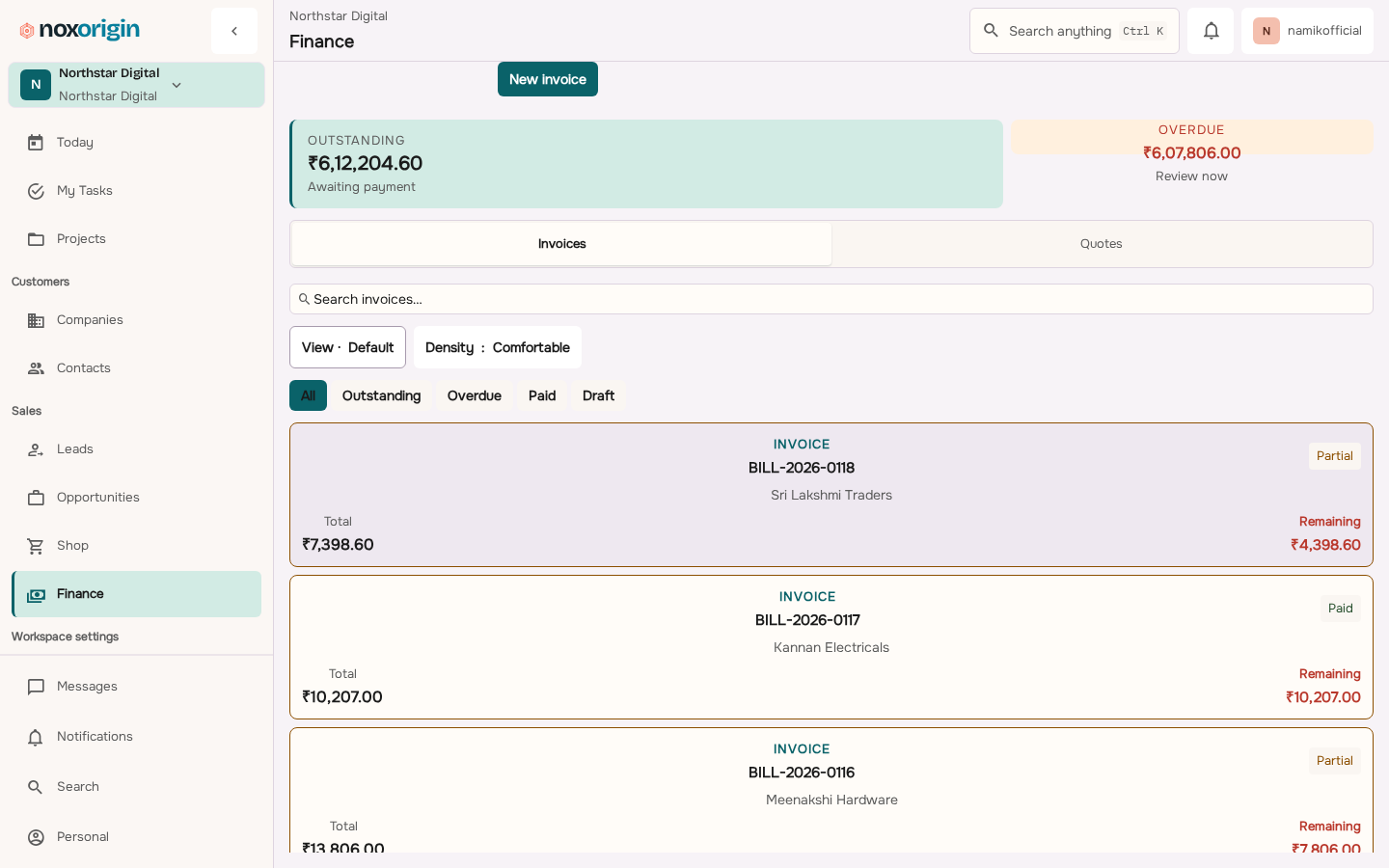
Client money, project economics, and the day-end summary read from the same records, so a line that was sold below cost or discounted away is visible to the owner rather than inferred at month end.
The stock movement and the invoice are the same transaction
In the unified app, Finance and Commerce read the same records, so a counter sale produces a tax-correct invoice rather than a separate document typed afterwards.
Where this is the wrong tool
Stated plainly, because buying the wrong system is more expensive than the problem was.
Manufacturing, BOM, and MRP
There is no bill of materials, routing, or production-order planning here. Recipe-based deduction is listed as a Nox-Billings deployment capability for food and manufacturing use, but this is not a production planning system and we will not sell it as one.
A warehouse execution or pick-face system
If the requirement is wave picking, dock scheduling, barcode-driven put-away, or labour management in a distribution centre, that is a different category of product with a different cost structure.
Fixed assets, depreciation, and a statutory ledger
Stock, invoices, payments, and reporting are what NoxOrigin records. Fixed-asset registers, depreciation, and statutory accounting stay with the accounting package built for them.
A deep costing engine
Costing depth is a dedicated-deployment concern, and a margin view built on partial cost data is worse than none because it looks authoritative. Be honest about which costs you genuinely record before trusting any margin figure.
Start with the counter and the stock, not a stocktake project
Starter is ₹800/month or ₹8,000/year with 3 users and one workspace. Growth is ₹1,600/month or ₹15,000/year, includes a 30-day trial, 10 users, and Razorpay payment links. Multi-counter and dedicated deployments are scoped separately.
Inventory software questions
Is inventory management software worth it for a small shop?
It is worth it once stock movements happen outside the person who sells. One owner selling from one counter can often hold the truth in their head. Two counters, a warehouse, a receiving routine, or anyone taking stock home at night is where a mental inventory stops being reliable, because a sale, a return, a damaged piece, and a transfer to another branch all have to be written down somewhere or they simply do not exist.
What does NoxOrigin actually track?
The Commerce area holds the catalog, stock balances per warehouse, purchasing raised as a purchase record, and the point-of-sale sale that moves the balance. Receiving, manual adjustments for damage or loss, physical counts, and transfers between locations are the movements that change a balance. Because a sale is a recorded event, the on-hand figure is produced by trading rather than by somebody remembering to update a sheet.
Can two branches or warehouses be held separately?
Yes. Warehouses are modelled separately, so each location has its own balance, and the consolidated view reads from the same records rather than from a monthly export. Workspaces, branches, and teams exist for the wider organisational split; which sites should be separate workspaces and which should be branches of one workspace is a decision worth making deliberately before rollout.
Does this run on a normal laptop, or do I need a special device?
The Commerce area runs on the web, and the mobile shell is part of the same operating model. Hardware needs are different for a counter: barcode scanning and thermal receipt printing are listed as Nox-Billings deployment capabilities, and thermal printing is an assisted-setup capability rather than an always-on default. Tell us what your counter actually uses during the walkthrough instead of buying hardware on a vendor’s list.
What about a dedicated Nox-Billings deployment?
Nox-Billings remains available as a scoped custom deployment, including customer-branded builds, and its capability inventory is deeper than the unified Commerce area — batch and lot tracking, expiry tracking, recipe-based deduction for food and manufacturing, and purchasing against suppliers are listed there. It is quoted after workflow, volume, hardware, branding, and integration requirements are reviewed, and it is not sold as a self-serve subscription.
What does NoxOrigin cost?
Starter is ₹800 per month and Growth is ₹1,600 per month with a 30-day trial, which is where a small business normally starts. Agency is ₹5,000 per month and raises the user, workspace, and active-project limits for groups running several sites. Current limits are on the pricing page and are read from the same catalogue the app uses.
Bring the stock list that is currently a guess.
Tell us what you sell, how many places you hold it, and what moves stock without passing a counter. We will show which part of that NoxOrigin covers and which part stays where it is.