Project delivery software that ends at the invoice.
Most delivery tools stop at the last task. NoxOrigin keeps the project, the tasks, the context that created it, and the billing that follows on one record, so a small team in India knows what is done, who is accountable for it, and when finished work can be turned into money — without a second system and a month-end reconciliation to prove it happened.
What delivery looks like without a record
Not a tooling failure — a consequence of the work being tracked in places that were never required to agree with each other.
Status is a question, not a record
Nobody can say what is genuinely in progress without a call, and the answer changes between the morning version and the evening version.
One person holds the plan
The delivery tracker exists in a person’s head or a private document, so a busy week quietly becomes a lost week with no recovery point.
The brief is reconstructed, not inherited
A new team member cannot read the project without a briefing call, because the scope and the context were never attached to the work.
Delivered work never becomes money
The work is finished, the client is happy, and nobody raises the invoice because nothing connects the tasks that were closed to the record that bills them.
From project to delivery to invoice
The six steps a small team can adopt without changing how it plans or how it talks to clients.
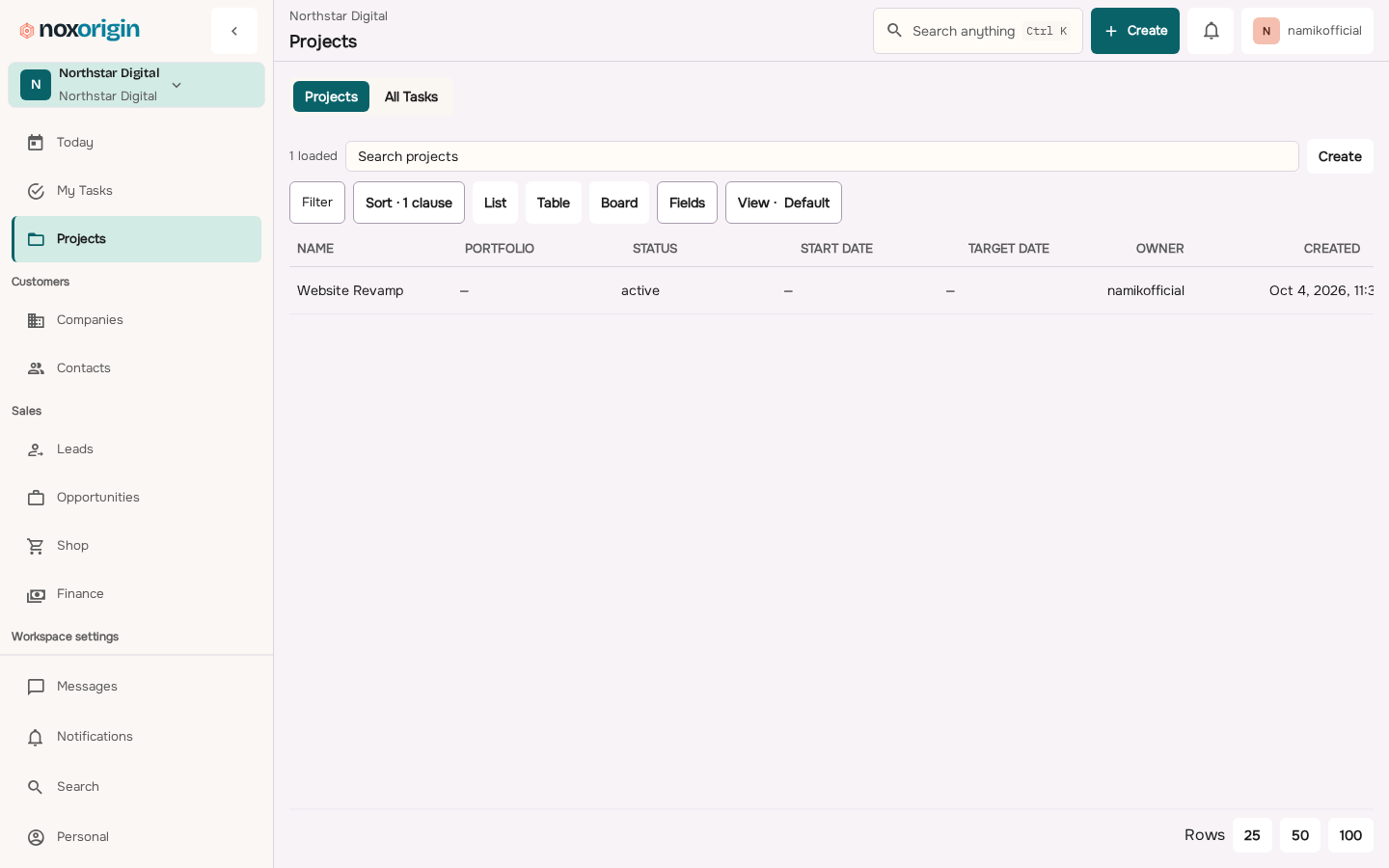
One project per engagement
A won opportunity, or a standing client with recurring work, becomes a project with its own status, dates, and members. The client, the scope, and the commercial history arrive with it rather than being re-explained in a kick-off call.
Break it into tasks a person owns
Tasks with assignees, due dates, and priorities, inside a list or board the whole team reads. Shared ownership stays a deliberate exception rather than the default, because one accountable person is the point.
Keep the follow-ups that are supposed to repeat
A client check-in, a renewal reminder, a site visit, a post-delivery call — recurring follow-ups are modelled as records that can be assigned and dated, not as calendar notes that die.
Let the status come from the work
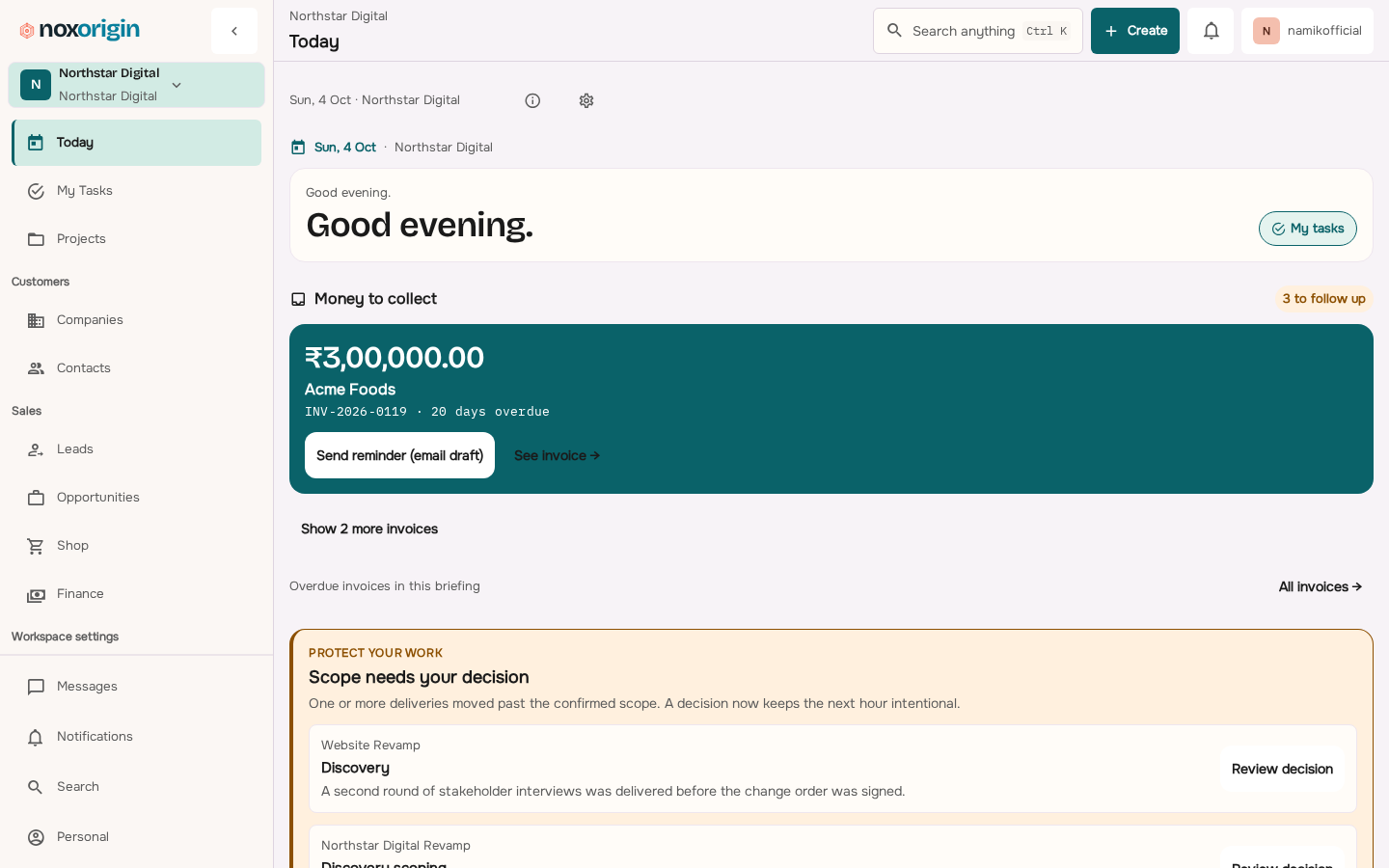
Project status is assembled from the tasks that are actually done, so ‘where are we’ has an answer that does not depend on the most optimistic person in the room.
Keep the handover survivable
Each task carries an assignment and a due date rather than living in a personal list, so when the person running the delivery leaves, the rest of the team can still see what is outstanding and for which client.
Let billing read the same records
Finished work becomes an invoice without a second person re-deriving what was delivered, and project economics then reads quoted, billed, and collected against the same project.
Assigned work, without asking a project manager
Today brings the work a person actually owns into one view, on web and mobile, so a delivery question rarely needs a status meeting to answer.
Where project delivery software is the wrong buy
Say which of these describes your team and we will point you at the category that fits.
A full agile planning tool
No sprints, backlogs, story points, velocity, or burndown. The task model here is deliberately small because the goal is work that is finished and billed, not a delivery ceremony.
Resource capacity and timesheets
No time capture, no capacity heatmaps, no utilisation targets, and no timesheet approval flow. Resource planning is a discipline with its own tooling, and pretending a task list covers it would waste your time.
Field service, dispatch, and technician routing
No scheduling, no route optimisation, no technician mobile workflow, no proof-of-service capture. Service dispatch software built for that is the correct product.
Support ticketing and SLAs
Triage, queues, escalation, and SLA clocks are a helpdesk product’s job. NoxOrigin tracks your clients and your delivery work; it is not a support desk.
Small team pricing, without a per-seat surprise
Growth is ₹1,600/month or ₹15,000/year with a 30-day trial, 10 users, 1 workspaces, and up to 50 active projects. The Today view on mobile is where delivery staff can see their own queue, and the plan figures come from the same catalogue the app enforces.
Project delivery questions
What does project delivery software need to do that a task list does not?
Answer three questions without asking anyone: what is done, who is accountable, and what can be invoiced now. A general task app answers the first two and stops. In NoxOrigin the work sits in a project that came from a won opportunity or an existing client, and because delivery and billing read the same records, finished work becomes an invoice without a second person re-deriving what was delivered.
Who can see a project, and who can see the money behind it?
Those are separate permissions. Delivery access is scoped to delivery actions — reading client and project context, creating and updating tasks, changing status — while pipeline and money actions stay gated separately. An admin can therefore run day-to-day delivery without holding the ability to raise an invoice or record a payment, and the audit log records sensitive actions so the question of who did what has an answer.
What happens when two people edit the same project?
It is the failure mode that matters most in a small team, because the owner opens the same record the team is working in. We have written about how concurrent edits behave in a small-business operating system instead of leaving it as a slogan — read it before you decide how much genuinely concurrent working your team does.
Is this an agile or sprint tool?
No. Tasks can be organised as a list or a board with statuses, priorities, due dates, and assignments, and that is the end of the planning vocabulary. There are no sprints, no story points, no velocity, no backlog grooming, and no release cycles. Teams whose method depends on those artefacts should keep the tool built for them.
How does finished work become an invoice?
Because delivery and billing read the same records. Project status is assembled from the tasks that are actually done rather than from the most optimistic person in the room, so Finance can invoice against real completion instead of a summary someone retyped. Phase-wise billing and advance payments against a project are handled in Finance rather than invented at the task screen.
What does it cost for a small team?
Starter is ₹800 per month with 3 users and one workspace. Growth is ₹1,600 per month with a 30-day trial, 10 users, and up to 50 active projects, which is where a small delivery team usually lands. Agency is ₹5,000 per month with 25 users, 3 workspaces, and up to 250 active projects.
Pick one project. See what is missing from it today.
Bring a live job — its quote, its tasks, and whatever the client has been told. We will show which parts NoxOrigin would hold and which parts it would not solve.