A QuickBooks alternative for an Indian business — with no QuickBooks price on this page, because no Indian QuickBooks page we could reach published one
QuickBooks has restructured its India lineup. Every Indian QuickBooks page we could reach published no rupee price: the host answered, it just carried no India price for us to quote. So this page quotes none — not an approximate one, not a converted one, not a remembered one — and sends you to ourZoho Books against QuickBooks India comparison, which records that finding. What we can tell you is what actually differs, and it is not the price: per-organisation against per-user pricing, an accounting ledger against GST invoicing and the trail behind it, and a tax that is recorded on the invoice and never determined by software. And the boundary first: Nox-Billings is a scoped custom deployment, not a product on a price list.
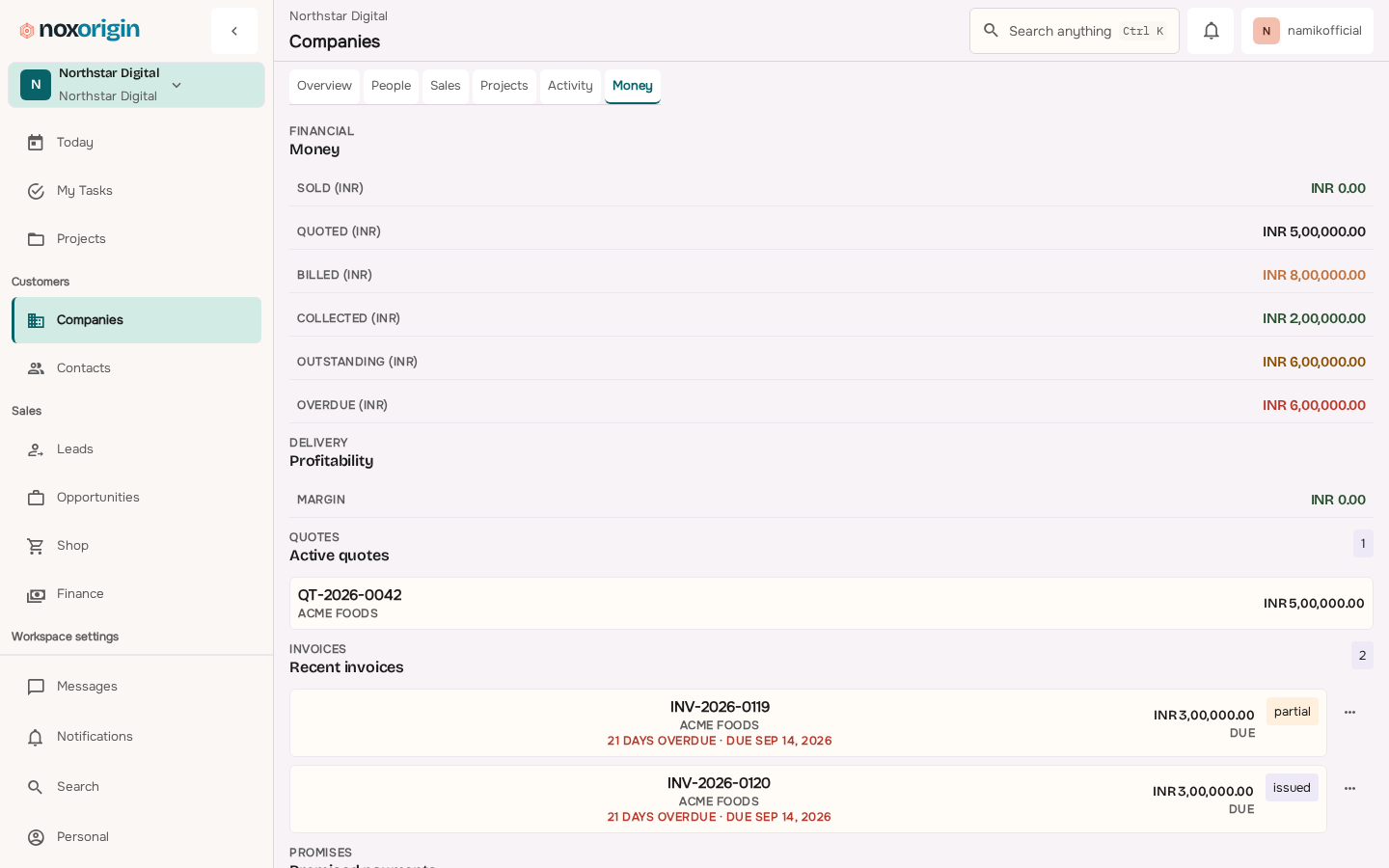
What a QuickBooks page would put first, and what this page puts there instead
A comparison page that opens with a number nobody can verify is worse than one that opens with the reason the number is missing. These four rows are the whole comparison: what cannot be quoted, how the two are priced, what each is actually for, and where the tax treatment stops.
This page quotes no QuickBooks price, and that is a finding
QuickBooks has restructured its India lineup, and every Indian QuickBooks page we could reach published no rupee price — the host answered, it just carried no India price. So this page carries no QuickBooks figure, no converted figure, no approximate figure and no remembered figure. The evidence is on our Zoho Books against QuickBooks India comparison, and we would rather point you at a number you can see than print one you cannot.
Pricing here is per organisation, not per user
Adding a second, third or fourth person adds a seat, not a licence bill. That is a structural difference rather than a saving: it does not make NoxOrigin cheaper for a one-person business, and it does not make it cheaper than a product priced per user without doing the arithmetic on your own headcount. Which is cheaper depends entirely on who you add and when. We do not publish a saving figure, because we do not have the other side of the comparison to divide.
An accounting ledger is not what this is
QuickBooks is an accounting package and its general ledger is the centre of it. NoxOrigin has no double-entry ledger and does not claim to be a replacement for one; if your requirement is the ledger, a ledger is what you should buy. What this holds is the operational record between a quote and the money — customers, quotes, invoices, payments, allocations, projects, expenses, tickets and events — and reporting over those records.
GST is recorded here and never determined here
A sale carries the rate applied to it and the split between taxable value and tax, printed on the invoice so the addition can be checked by hand. NoxOrigin does not decide which rate applies, does not determine place of supply, does not file GST returns or any other statutory return, has no e-invoicing submission, no e-way bill generation, no TDS or TCS recording and no reverse-charge handling. It is not certified and it is not a tax authority. Your chartered accountant answers the rules; this product holds the records.
Six differences that survive a lineup being restructured
Lineups change and the host answers, but these are structural: how the money is charged for, what the product is centred on, and what happens to a record when a person is not looking at it. None of them is a QuickBooks feature claim — each is a difference between two products doing different jobs.
Per-organisation pricing against per-user pricing
A per-user product charges again for every person who signs in, so the bill moves with the team and the cost of a fifth employee falls on you from the day they need access. A per-organisation product charges once, and seats are a configuration question. Neither is automatically cheaper: for one user, per-user pricing can be the smaller number, and for a growing counter team it is the other way round. The only honest way to compare is your own headcount over a year, on the comparison page, with figures you can see.
A ledger against GST invoicing and the trail behind it
The centre of an accounting package is the ledger: journals, accounts, a trial balance, opening balances and a period close. The centre of NoxOrigin is the invoice and what surrounds it — the quote it came from, the customer, the payment, the allocation of that payment across invoices, the expense behind the cost, the ticket that came out of it. A ledger answers what happened to the accounts. This answers what happened to the customer and what they owe, and it holds the payments and allocations that make that figure a projection rather than a flag.
The tax is recorded, and the treatment is a person’s
The invoice shows a taxable value and a tax figure that add to the total, and the rate that was applied is the rate on the record. Nothing decides whether that rate was right, where the supply happened, whether input credit applies or how a correction should be treated. Where the rule matters, this page and this product stop and point to your chartered accountant, which is a smaller promise than a product that sounds confident and is quietly guessing.
One customer record, rather than a lead in one place and an account in another
A lead, a contact, the customer they became, their invoices, their payments, the project the work was on, the expense against it and the tickets from an event they attended are all attached to the same record. The failure this prevents is the ordinary one: a sales record and a billing record for the same person that disagree, each correct inside its own system. If that is the problem you have, it is a records problem and this is the part that addresses it.
The operational areas around the invoice
Expenses are a Nox-Billings capability and purchasing lives in Commerce. Merging duplicate records is a setup decision, not an automatic process: detection flags candidates and a person reviews, and nothing merges on its own. Shift close and day-end reconciliation are assisted-setup maturity rather than a switch you flip on day one. The honest summary is that the surrounding areas are real, some are narrower than a buyer may expect, and none of them is finished-but-unannounced.
A scope change is a new quote, and a merge is a person
There is no change-request record, no milestone or deliverable record, no contract editor and no e-signature, so a change in scope becomes a NEW quote on the same project and the first quote is never overwritten. Detection of duplicate customers or invoices flags candidate pairs and a human reviews them; the merge policy is a setup decision. These are deliberate limits rather than gaps, and a product that quietly merged your records would be a product you could not argue with later.
Three constructed figures, and one we refuse to print
Every figure here is constructed for this page so the arithmetic can be checked by hand. It is not a NoxOrigin result, not a customer’s record and not a benchmark. The 18% appears purely to make the addition checkable, and it is not a rate NoxOrigin has determined for any supply. The QuickBooks side of the money comparison is on the linked comparison page, not here.
What per-user pricing does to a headcount, structurally
A constructed illustration with no prices in it, because that is all a structural difference is worth without both numbers. On a per-user product, three people signing in means three licences, so the licence cost of the year is three times the cost of one. On a per-organisation product, three people signing in is one product and three seats, so the cost of the year is one times the cost of one. Whether that is cheaper is 3 × P against 1 × P for an unnamed per-user price P, and whether three people need simultaneous access is the question that makes it a real decision rather than an arithmetic one.
One constructed invoice, and the two figures on it
A constructed taxable value of ₹10,000 with GST at 18% of 10,000 × 0.18 = ₹1,800, giving a document total of 10,000 + 1,800 = ₹11,800, which checked the other way is 10,000 × 1.18 = ₹11,800. The 18% appears only so the addition can be verified by hand; it is not a rate NoxOrigin has determined for any supply, and it is not a tax position. Two numbers on one document instead of one is the whole difference between a record you can re-add and a total you have to trust.
A second invoice and a payment that has not been allocated
A second constructed taxable value of ₹25,000 gives tax of 25,000 × 0.18 = ₹4,500 and a total of ₹29,500. The two invoices total 11,800 + 29,500 = ₹41,300, which is also 35,000 + 6,300 when the taxable values and the taxes are added separately. Now suppose a payment of ₹11,800 is received and never allocated. An invoice and a payment are different records, and paid is a projection of allocations rather than a stored flag, so that ₹11,800 has reduced nothing: the customer still shows ₹29,500 outstanding, and the outstanding figure is wrong until somebody allocates it.
The same payment, allocated, and the difference it makes
Allocate the ₹11,800 payment to the ₹11,800 invoice and the month reads as one invoice settled and one open. The second invoice is untouched, so what remains due is 29,500 − 11,800 = ₹17,700, which is the second invoice’s own total of 25,000 + 4,500 with nothing further paid against it. Checked as a taxable figure: 25,000 remains taxable and 4,500 remains tax, so 25,000 + 4,500 = ₹29,500 is still the invoice total and ₹17,700 is the part of it that has not been settled. The same rupee figure arrived in both cases; the difference is entirely in whether a person allocated it, which is why an unmanaged allocation queue is the most common reason two reports stop agreeing.
The figures this page will not give you
There is no saving figure, no percentage cheaper, no cost per user comparison, no compliance rate, no filing deadline, no penalty figure and no claim about how most small businesses in India choose their accounting software anywhere on this page. Each would need a number from the other side that we do not have, or a denominator nobody agreed. The comparison page linked below is where the QuickBooks-side evidence lives, and this page is where the structural difference is explained.
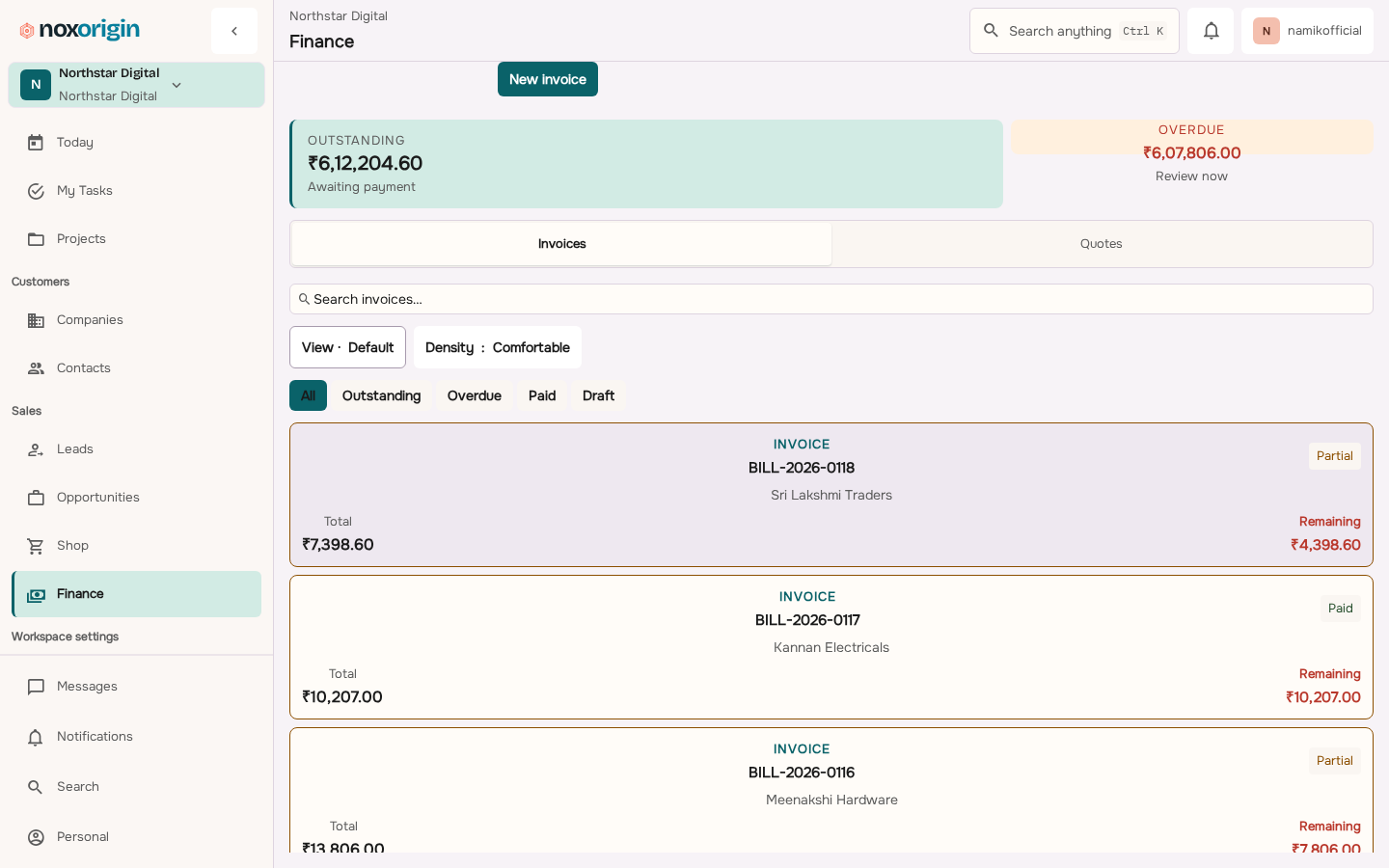
What a buyer asks when they arrive from a QuickBooks search
If the first three rows apply to you, a general accounting package is the right category and no plan on this site changes that. The rest is what NoxOrigin holds instead, and the limits it keeps on purpose.
| What a buyer asks for | In NoxOrigin |
|---|---|
| The same price as QuickBooks in India | This page publishes no QuickBooks figure, because every Indian QuickBooks page we could reach published no rupee price. The evidence is recorded on our Zoho Books against QuickBooks India comparison, and the structural difference is per-user against per-organisation pricing. |
| A general ledger with double entry | No. There is no general ledger, no trial balance, no chart of accounts, no opening balances and no accounting period close. NoxOrigin is not an accounting package and does not replace one. |
| GST invoicing with the tax split visible | Yes, as records. The invoice carries the taxable value and the tax separately so the total can be re-added by hand, and the rate that was applied is the rate on the record. |
| Decide the GST rate and place of supply | No. NoxOrigin records the rate applied to a sale and never determines it. There is no place-of-supply engine, no supplier-state determination and no rate-change handling. Your chartered accountant answers the rules. |
| File GST returns, e-invoices and e-way bills | No. There is no return filing, no return generation, no e-invoicing submission and no e-way bill generation, and no TDS or TCS recording and no reverse-charge handling. NoxOrigin is not certified and is not a tax authority. |
| Migrate my customers and open invoices | Yes, the records worth migrating. We will tell you plainly what does not come across, and a ledger with journals and reconciliation history is a different kind of record from an invoice. |
| One customer across sales, billing and projects | Yes. The lead, the contact, the customer, their invoices, their payments, the project and the expense against it are all one record, which is what stops a sales record and a billing record from disagreeing about the same person. |
| Merge duplicate customers for me | Not automatically. Detection flags candidate pairs and a person reviews them, and the merge policy is a setup decision rather than a running one. Nothing merges on its own. |
| An accounting period that closes itself | No. Shift close and day-end reconciliation are assisted-setup maturity rather than self-serve switches, set up with you. The cash, card and UPI records underneath them exist from day one. |
| Timesheets, payroll and a rate per hour | No. There is no timesheet record and no payroll module, and expenses are a Nox-Billings capability while purchasing lives in Commerce. A project cost is a figure, not an hourly rate. |
Where this is the wrong tool
Arriving from a QuickBooks search means arriving with an accounting package in mind. These are the six things on this page that are not one, and the two of them most likely to be assumed are the ledger and the automation.
It is not an accounting package and does not replace one
No general ledger, no double-entry bookkeeping, no trial balance, no chart of accounts, no opening balances and no period close in the accounting sense. If a general ledger is your requirement, buy an accounting package. This site does not claim to solve the double-entry period and does not publish a page pretending to.
It is not a compliance product
No GST return filing, no return generation or preparation, no e-invoicing submission, no e-way bill generation, no TDS or TCS recording and no reverse-charge handling. No certification is claimed or implied, and nothing here is tax or compliance advice. Where a rule matters, that is your chartered accountant’s question.
It does not migrate a ledger
Customers, open invoices and their outstanding balances are worth migrating, and we will tell you plainly what does not come across. A ledger with journals, opening balances and reconciliation history is a different kind of record from an invoice, and a clean import of one into the other would be a claim we cannot make.
Nothing merges on its own
Duplicate detection flags candidate pairs and a person reviews them. The merge policy is a setup decision rather than a running one, and no customer, invoice or payment is ever combined without a human deciding it. A record that merged itself is a record you cannot take back, and that is the reason for the rule.
Shift close and day-end are assisted, not self-serve
Shift close and day-end reconciliation are assisted-setup maturity, not switches you flip on day one. The records underneath them — the cash, the card and the UPI entries, the invoices, the allocations — are ordinary records from day one, and the routine around them is set up with you rather than enabled by you.
There is no timesheet and no payroll
Expenses are a Nox-Billings capability, purchasing lives in Commerce, and no timesheet record or payroll module exists, so a project cost cannot be turned into a rate per hour. An expense and a payment remain different records, and paid remains a projection of allocations.
Nox-Billings is scoped work, so the platform plan price never covers it
This is the part a buyer should settle before the conversation goes further. Nox-Billings is a scoped custom deployment, quoted and priced separately against your own configuration, and the platform plan price does not apply to it — the same is true of NoxCRM and Nox-Tickets. Growth is ₹1,600/month or ₹15,000/year, includes a 30-day trial, 10 users, 50 active projects and 10,000 contacts, and none of that includes a scoped Nox-Billings deployment. If you are comparing this page against a QuickBooks subscription, the like-for-like comparison is deployment against deployment, not plan against plan.
QuickBooks comparison questions, answered before you buy
How much does QuickBooks cost in India?
This page does not tell you, and the reason is specific rather than evasive. QuickBooks has restructured its India lineup, and every Indian QuickBooks page we could reach published no rupee price at the time we checked — the host answered, it simply carried no India price to quote. Rather than publish a figure we cannot see, we keep the evidence on the page that does record it: our comparison of Zoho Books and QuickBooks India. Read that page for the QuickBooks side. What we will state here is how the pricing model differs structurally, because that is the part that does not change when a lineup is restructured.
Is NoxOrigin cheaper than QuickBooks?
We do not make that claim, because it is not a claim we can support. Comparing a product priced per organisation against one priced per user requires both prices, and we do not have a rupee price for the QuickBooks India side. A structural difference is not a saving: per-user pricing means the licence cost moves when the team changes, and per-organisation pricing means it does not, and which of those is cheaper depends entirely on how many people you add and how often. Decide that on your own headcount, with your accountant, on the comparison page, and treat any saving as yours to calculate rather than ours to claim.
What actually differs between NoxOrigin and QuickBooks?
Three things, and they are structural rather than cosmetic. First, pricing is per organisation here rather than per user, so a second, third and fourth person changes the cost of one product rather than the number of licences. Second, the centre of the product is an accounting ledger in QuickBooks and GST invoicing plus the operational records around it in NoxOrigin — quotes, invoices, allocations, receipts, customers and projects, with reporting over them. Third, GST is recorded as a split on an invoice and never determined by software. The comparison page linked below carries the evidence for the QuickBooks side of each.
How is GST handled here?
Recorded, not determined. A sale carries the rate that was applied to it and the split between taxable value and tax, and both are printed on the invoice so the addition can be re-checked by hand. NoxOrigin does not decide which rate applies, does not determine the place of supply, and does not file GST returns or any other statutory return. There is no e-invoicing submission, no e-way bill generation, no TDS or TCS recording and no reverse-charge handling, we are not certified, and we are not a tax authority. Where a rule matters, that is your chartered accountant’s question.
Is QuickBooks an accounting package and is this one?
QuickBooks is an accounting package, and a general ledger with double-entry bookkeeping is the centre of it. NoxOrigin is not a general ledger and does not claim to be one — this site has an article on the double-entry period and does not pretend to solve it. What NoxOrigin holds is the operational record a billing and CRM business runs on: quotes, invoices, payments and the allocations between them, customers, contacts, projects, expenses, tickets and events, with reporting over those records. If you need a full accounting system, use one. If what you need is the trail between a quote and the money, that is what this is.
Can I migrate from QuickBooks to NoxOrigin?
A migration is a data decision, not an export, and we would rather you read about that before you start than afterwards. We do not guarantee that every field carries across, because a ledger with journal entries, opening balances and reconciliation history is a different kind of record from an invoice. What is worth migrating is the customer list, the open invoices and their outstanding balances, and we will tell you plainly what does not come across. Start with the customers and open invoices, reconcile by hand afterwards, and treat the rest as history you are reading rather than importing.
What does Nox-Billings cost?
Nox-Billings is a scoped custom deployment, quoted and priced separately against your own configuration, and the platform plan price never applies to it — the same is true of NoxCRM and Nox-Tickets. The platform plans are priced for the platform itself, and none of them includes a scoped Nox-Billings deployment. The Growth plan and its limits are set out further down this page, and the honest way to read it is that a deployment is quoted work rather than a line on a price list. This page is therefore about a product you cannot buy off the pricing table.
Compare on structure, and get the figures from a page that carries them.
We will not quote you a QuickBooks price, because every Indian QuickBooks page we could reach published no rupee price — the host answered, it just carried no India price. The comparison page linked above holds that evidence, and this page holds what actually differs: per-organisation against per-user pricing, an accounting ledger against GST invoicing and the trail behind it, and a tax recorded on the invoice and never determined by software. And the boundary to settle early: Nox-Billings is a scoped custom deployment, quoted against your own configuration, and it is never sold at the platform plan price.