The estimated depth, the agreed per-foot rate, and the depth actually billed sit on the same job, so the difference between the estimate and the reality is a number you can read rather than a discrepancy you discover at the year end.
Borewell & Drilling Contractors
Borewell and deep-drilling contractors who quote a depth, move a rig, and then bill for the footage they actually reached — where the margin on a job is decided by the estimate and the measurement is normally kept on paper in the truck.
The problem
The work happens a hundred feet below a compound and the customer never sees any of it, so the only thing they can argue about is a number. A driller has to commit to an estimated depth before the rig moves, because moving a rig is expensive and moving it twice is worse, and then the well either comes in at that depth, above it, or well below it. In most of this trade the estimated depth, the agreed rate per foot, the footage actually drilled, and the footage the customer was charged for live in four different places: a rate card in the office, a signature on a slip, a column in a book in the truck, and a figure the customer heard from somebody else. Nobody is lying; the number simply has no single home. Then there is the second half of the invoice — casing, PVC pipe, filter, head assembly, the extra mobilisation when the well is not where the water was expected, the diesel and the truck — which is money the driller has spent and, unless somebody writes it down as a line on the same record, the office never sees until the quarter is closed. And a builder or a housing board pays against a site, slowly, often after the work has been signed off, so the job is complete, the bill has been raised, and the money is a conversation rather than a record.
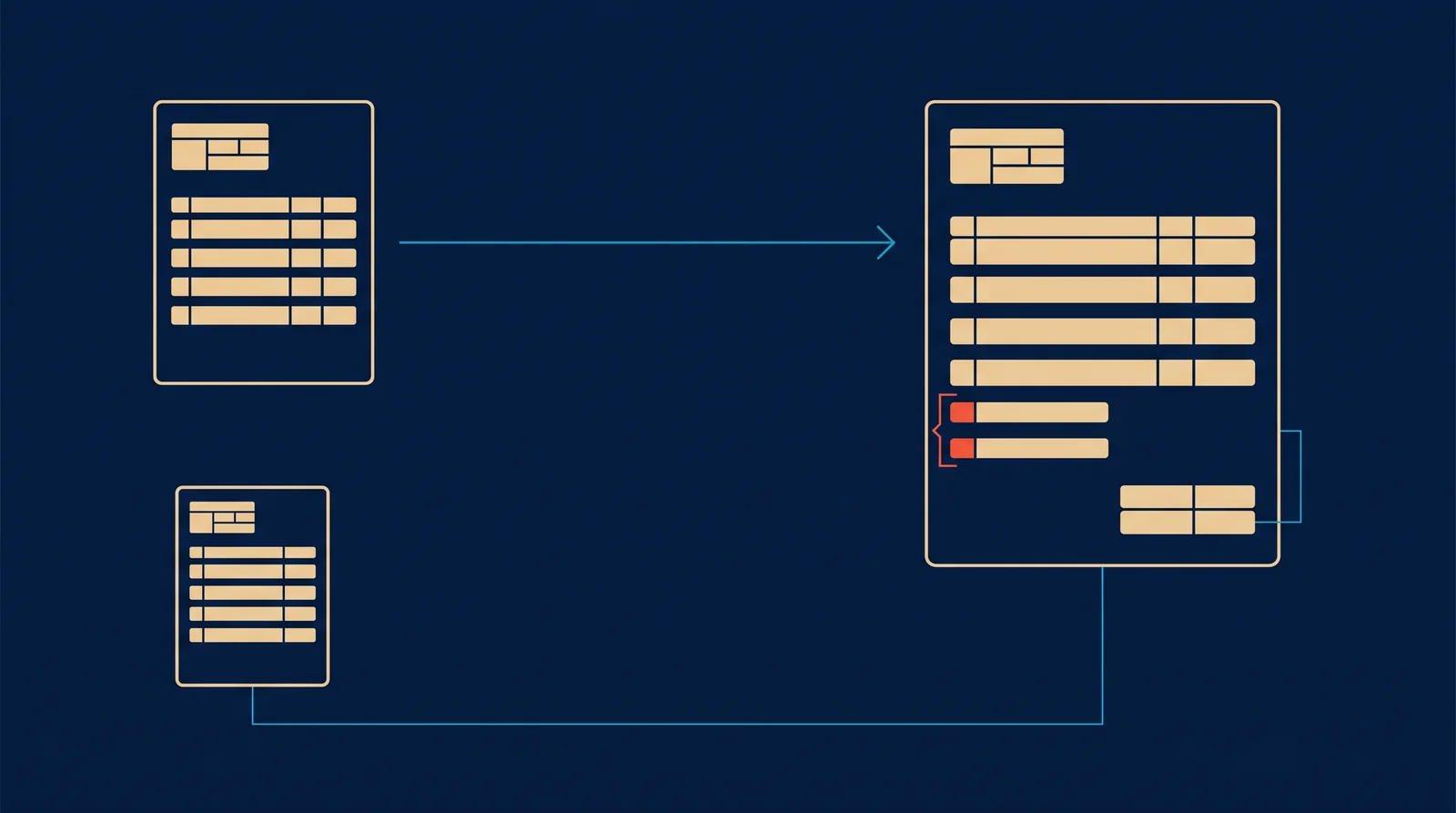
A working day
The day starts with a call, and the call is really a judgement about a hole nobody has dug yet: how deep, what diameter, what casing, and what the water table looks like in that part of the block. A quote goes out on a per-foot rate, usually to a builder, a contractor, or a household, and the day the quote is accepted the office learns what the drilling is expected to earn and what the riser, the pump, and the fittings are expected to add. Then the rig is on the road and the office is mostly out of the loop, because the site log is a sheet of paper and the depth call is made by a driller looking at a tape. Midway, something changes — hard rock, a collapse, a casing run that costs an extra hour — and the honest handling is a new number on the same job, not an argument at the end about who was right. When the rig stops, the depth is called out and written down, and somewhere between the site and the ledger a hundred feet of difference turns into either a healthy job or a loss. At the end of the month, the figure the owner wants is not the revenue; it is the difference between the feet they quoted and the feet they drilled, and whether the well that took nine hours to case is still profitable once the fittings are on the bill.
How NoxOrigin fits this business
Every business runs the same sequence, from first contact to money in. NoxOrigin keeps each step tied to the last: Customer → Opportunity → Quote → Project → Work → Invoice → Payment.
The steps are the same. What changes is the words you use for them, the pressure at each one, and who is responsible for it. This is how it reads for borewell & drilling.
The builder, contractor, or household as a customer
Customer → Opportunity
A site enquiry has to become a customer record with a location, a contact, and a person who can be called, because the next bore on the same street is a repeat job decided entirely by how the last one went. Merge policy is a setup decision: duplicate detection flags candidates and a person reviews them, since the same developer books under a project name, a firm name, and a personal name and only the phone number reliably tells them apart.
The well quoted by the foot
Quote
The quote is the estimated depth, the diameter, the rate per foot, and the fittings, so a change of depth or a change of scope is a new quote on the same job rather than a number somebody edited in a book. A rate quoted for a shallow well is not a rate quoted for a deep one, and holding a per-foot price across a change of depth is exactly how a profitable job becomes a loss. There is no e-signature and no contract editor, so a written drilling agreement stays where the contractor keeps written agreements.
The drilling job once the rig is committed
Project
Once the quote is accepted the job becomes the live record with the depth, the fittings, the site, and the terms it was accepted against, so a deeper well or an extra casing run is visible as a change rather than quietly absorbed. A change mid-drilling is a new quote on the same project. There is no change-request record, no milestone record, and no deliverable record, and nothing here schedules the rig or the crew, logs the site visit, or keeps the strata.
The footage actually drilled and the works actually done
Work
The work is the depth reached, the casing and pipe run, the pump and fittings installed, the mobilisation, and the hours the rig was on site — recorded against the job so the next estimate for the same block of land starts from what this well really cost rather than from a guess. It is the only place the cost of a job is visible, and it does not reach the customer's bill unless somebody puts it on one. There is no timesheet record and no payroll module, so the crew's hours behind the footage are a number a person knows.
The bill for the footage drilled
Invoice
The invoice carries the depth, the per-foot rate, and the fittings as their own lines, so what the customer is paying for can be read without trusting anybody's memory, and a variation in depth is visible as a line rather than as a difference in a total. An invoice and a payment are different records, and in this trade the distinction is the mechanism: a deep well is often billed in stages or on a slab, and the part that is not yet billed is work the contractor has done and not recovered.
The payment against a site
Payment
Money arrives against a specific invoice, usually in instalments released by a site engineer or a builder, sometimes after a deduction, and recording the allocation against the invoice is what lets the contractor see a job close. A part payment here is common and is not a small full payment: it is a stage release, and the balance belongs to a claim the contractor has to chase separately on the same job.
Job close and the honest book
Reports
Quoted depth against billed depth against collected value by customer and by site, with the number that matters being how far actual footage ran from the estimate and what that did to the margin on the job. There is no strata or geological data here, so why a well came in where it did stays in the driller's knowledge, and the report's job is to make the money consequence of that knowledge visible afterwards. Casing overruns, extra mobilisations, and variations nobody invoiced all need to be records someone raised, because none of them appear in a revenue figure on their own.
What changes
What is different by next week.
A change in depth, diameter, or casing becomes a new quote on the same job with its own rate, so the customer can see what the change did to the price and not only to the total.
Casing, pipe, pump, and fittings are lines on the bill rather than a lump sum, so the fittings that made the job profitable are visible and the mobilisation that made it unprofitable is too.
A part payment released against a site is recorded as a part payment against a specific invoice, which is what keeps an instalment from being mistaken for a settled account.
The site, the contact, and the depth last drilled on that address go on the customer record together, so the next enquiry on the same street starts from this well's outcome instead of from a blank form.
Who does what
Different people need different parts of the same information.
Everyone is looking at the same information. What changes is which part of it they are responsible for.
- Site and enquiryVisits the site, judges the expected depth and water, and quotes the per-foot rate — without holding the permission to change that rate after the quote is accepted.
- Driller and rig crewRuns the rig, decides what the hole is doing, and reports the depth reached and the fittings installed, without holding invoicing or collection permissions.
- Office and accountsRaises the quote and the invoice, records the footage billed, allocates each part payment against the invoice it belongs to, and reconciles the balance on a site.
- ProprietorDecides the per-foot posture for the next season, which sites get mobilisation included in the rate, and which unpaid site is a wait and which is a loss.
What software should not decide
NoxOrigin keeps the facts. You still make the decisions.
Keeping the facts in one place ends the argument about what happened. It does not make the decisions that were always yours to make.
- How deep to quote when the last three wells on that street came in at different depths. A deep estimate protects the job from a bad bill but puts the contractor's margin at risk if the water comes in early and the customer reads the footage as the price; a shallow estimate is the opposite bet, and neither is knowable in advance.
- Whether to bill the full per-foot rate for footage the customer did not ask for because the rock demanded it. Billing honestly protects the relationship and the margin; absorbing it is generous and is invisible to the customer either way, which is why it has to be a decision rather than an accident.
- Whether to mobilise a second time to a site where the casing run went wrong. Going back costs the contractor a day and the customer's patience; writing it off costs the same money and a night's sleep, and the difference between the two is usually whether the customer is somebody with more sites to give.
- Whether to keep drilling past the point where the job has stopped paying for itself. Stopping protects the cash position and disappoints a customer who has been waiting; continuing finishes the well and may be billing a loss the owner will not discover until the margin report.
- Whether to press a site for a released instalment. Pressing gets the money and signals impatience to a builder who controls the next phase; waiting is normal practice in this trade and concentrates collection into a few weeks of the year.
Free tools
What this trade tends to ask, answered with a calculator.
Quotation generator
What a per-foot quote costs to build before the rig is committed — depth, rate, fittings, tax, and the margin underneath them, so the estimate is a price rather than a feeling. A calculation to paste, not a signed quote.
Scope change cost calculator
What going deeper than quoted costs before you tell the customer — the extra footage, the contingency, and the price that holds your original margin. A calculation for the conversation, not a change-order record.
Where to look next
The product areas this depends on.
Quotes, Billing & Finance
The well quoted by the foot, and the bill carrying the depth drilled, the per-foot rate, and the fittings as their own lines so the invoice can be read without trusting a memory.
Customers & CRM
The site, the contact who books, and the person who pays — with the depth last drilled on that address on the record, which is what the next bore on the same street is decided on.
Project profitability
Quoted value against billed value per job, so a well that came in deeper than estimated becomes a findable pattern rather than an anecdote the owner tells at the year end.
Customer payment tracking
Stage releases and part payments from a site allocated against the specific invoice, with the balance still open on a job whose work is already finished.
Before you look at pricing.
Does it record the depth the rig actually drilled?
No. There is no depth or footage measurement record, no drilling telemetry, and no strata or geological log. The footage and the works are recorded on the job as work delivered, and the depth is written on the invoice as a line, but nothing in the platform measures a hole or verifies a tape reading. If the depth is the number your business is priced on and disputed over, it stays on the driller's record and on the customer's copy of the bill.
Does it schedule the rig or the drill crew?
No. There is no rig scheduling, no crew roster, no dispatch, and no maintenance or equipment register for the rig, the compressor, or the pump sets. NoxOrigin records the work that came out of a job once it has happened; where the rig goes next and which operator is on it is a phone call and a chalk board. It is not a rig or fleet management system.
Does it log the site visit, the survey, or the water strata?
No. There is no site-visit or survey log, no trial-bore record, and no geological or strata data. What is on the customer and the job is the location, the quoted depth, the delivered depth, and the terms — not the observations that produced the estimate. Where a geologist or a borewell log matters to the decision, that stays in your own paperwork and the driller's knowledge.
Does it handle pumps, fittings, and the equipment side?
Stock, purchasing, receiving, transfers, and low-stock signals are Commerce, which is enough to know what casing, pipe, and fittings are in the store and what is running out. There is no pump or equipment register, no serial or warranty tracking, no van or site-level consumable tracking tied to a job, and no purchase-order engine inside the platform. Purchasing and stock movement are in Commerce, and Commerce is part of NoxOrigin rather than something a plan adds or withholds, so casing, pipe, and fittings can be bought and received on any plan. The expense side is the other way round: an expense claim, an approver, and a reimbursement are a Nox-Billings capability, scoped and quoted separately, and Commerce holds none of them.
Does it generate an e-way bill or file anything for us?
No. NoxOrigin does not file GST returns, generate e-invoices, issue e-way bills, record TDS or TCS, handle reverse charge, determine place of supply, or hold any bank connection or credentials. A drilling job that moves a rig, a compressor, and a truck across a state line may need a document you obtain and manage yourself; that is your compliance adviser's work, not a record here.
How does it handle a well that went deeper than quoted?
As a new quote on the same project, with its own depth, its own per-foot rate, and its own line on the invoice — because there is no change-request, milestone, or deliverable record to edit. That keeps the original quote intact and honest, which matters in a trade where the customer is judging whether the estimate was real, and it puts the variation somewhere the contractor and the customer can both read it.