Quote approval as a permission on one action — not a note on a document, a parallel chain, or a rule builder
A quote that needs a discount approved is a different document from one that does not, and most systems treat the approval as a note attached to a document nobody was stopped from sending. For an approval to be a control rather than a comment, four things have to be true: who can approve, up to what figure, what happens when the approver is not available, and what is left behind afterwards. NoxOrigin treats approval as a permission evaluated per action — the limit and the person are checked when the action is taken, and the record shows the action. Be clear about the boundary: there is no parallel approval engine, no rule builder, and no automated escalation here. If a price can be offered at all, the system is what says no, and it says no to the person, not to the document.
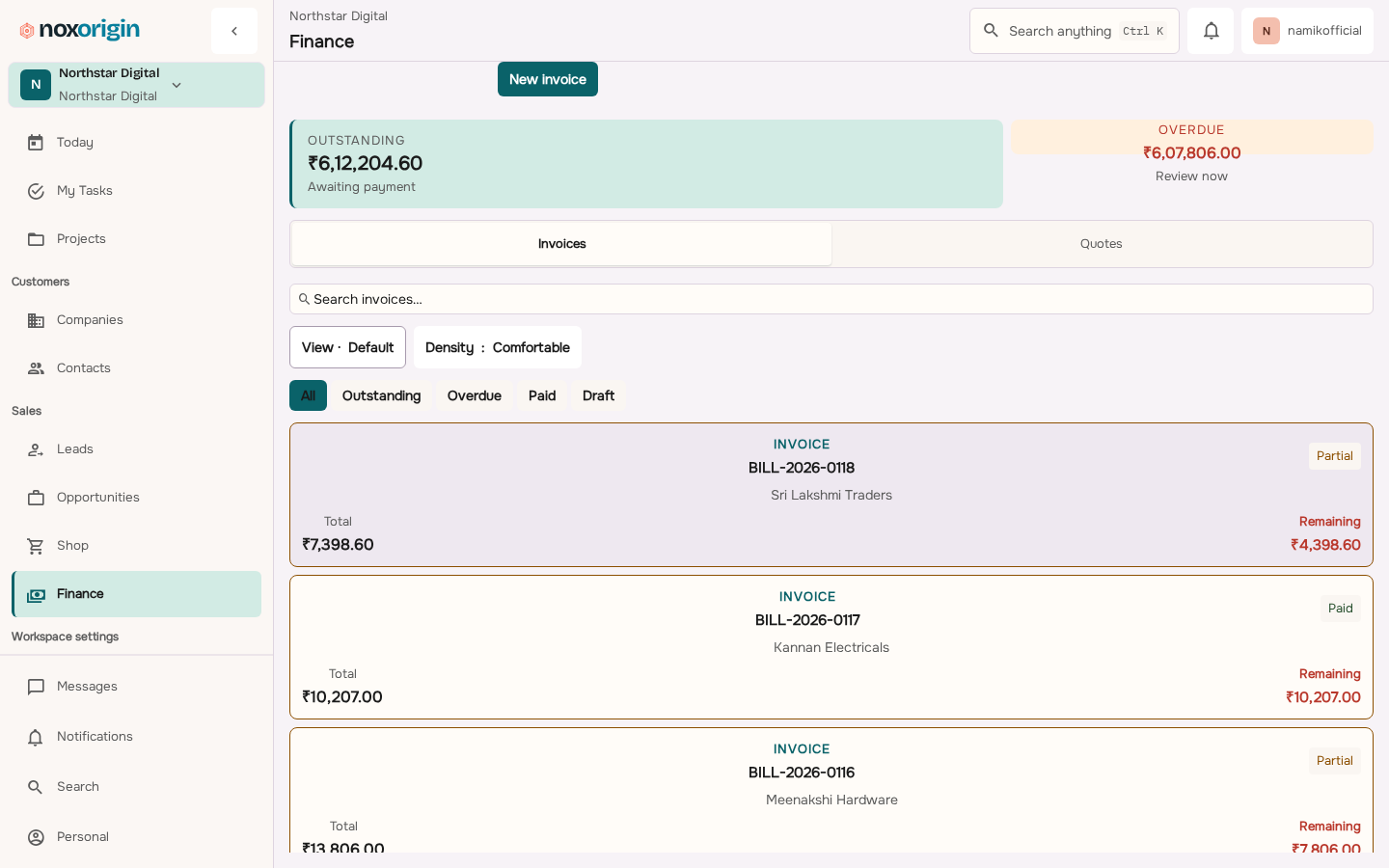
Three things this is not, and the one thing it is
An approval engine is easy to sell and easy to build badly. The three things below are real categories of software with real buyers, and none of them is here. The last item is what NoxOrigin actually gives you on a quote before it goes out.
The parallel approval engine
There is no multi-stage approval chain, no joint or sequential approval, no quorum, no voting, no delegation of an approval to a second named person, and no routing that decides who must see a quote before it can move. Nothing here waits on two people. The reason is not simply simplicity: a chain of approvals is a system that is correct on the day it is designed and quietly wrong the first time somebody leaves, is promoted, or is on leave, and the record still shows that the chain ran.
The rule builder
There is no visual rule editor, no if-then construction screen, no user-defined policy language, no conditional chain with named conditions and actions, and no simulation of what a rule would do. A permission is a person, a document type, an action, and a limit. It cannot express a policy with exceptions, which is exactly why it can be read correctly by the person being refused — the failure mode of a rule engine is that the rule is right and the person applying it cannot see why.
The automated escalation
There is no timer, no auto-reassignment, no substitute-approver chain, no automatic escalation after a delay, no reminder queue that moves authority, and no out-of-office handling. A quote awaiting an absent approver simply waits. Automatic escalation transfers the permission without transferring the judgement, and the record then shows a discount authorised by somebody who did not look at the client, the history, or the rate sheet — which is a worse outcome than the delay it was meant to remove.
What there is instead: a permission, a limit, and a recorded action
A named person or role, a stated limit, and the action they are permitted to take on a quote. The limit is checked at the moment the action is taken, and the record keeps the action, the person, the date, the quote number and the revision. Nothing is unlocked by an approval, because nothing was locked by a missing one: the permission was always there, and what the record adds is the ability to reconstruct who decided what.
Four things that have to be true before an approval is a control
If any one of these is missing, the approval is documentation. Most systems that sell approval workflows have all four in some form and are still treated as a comment, because the limits are implicit and the trace is optional.
Who can approve, named rather than implied
A limit attached to a role is a policy. A limit attached to a person is a control. The question to ask of any approval system is whether you can point at the record and say which individual permitted the price, and whether that person was still in the role on the day. When the answer is a role, the record tells you a rule was satisfied and not who applied it, which is the difference between a control and an audit trail of a rule.
Up to what, measured against a figure somebody named
A limit of ₹15,000 is not a limit until it says which number it applies to. Against the subtotal it means ₹15,000 off the price; against the total, which includes tax, it means roughly ₹12,712 off the price. The intent is identical in both cases and the difference is ₹4,988. An approval limit that does not name its figure is an approval limit that means whatever the person applying it decided it meant that day.
What happens when the approver is unavailable
This is the question almost no approval demonstration answers, because it only fails on somebody's holiday. There is no automatic escalation here, so the answer is that a person moves the decision, by hand, to a colleague who holds the permission. That is slower, and it is the correct trade: an escalation that fires without a human transferring the decision produces a discount approved by somebody who did not know they had approved anything.
What is left behind, and whether it can be read a year later
Who, when, against which quote number and which revision, and up to what limit. Four facts. An approval that leaves a changed total and a note is not auditable, because the audit question is not whether a discount was given — it is who authorised it. A record that cannot answer that question describes an unattributed price change, and an unattributed price change is indistinguishable from a mistake, a favour, or something that should end a career.
A pre-send routine with a refusal in it
Six steps, and the third is the only one that makes this a control rather than a convention. Everything else exists so that the refusal is a decision somebody made deliberately, with a figure in front of them.
Write the number, so the thing being approved is a figure and not an opinion
The request that reaches an approver is often a message saying this one is important. That is not reviewable. A subtotal of ₹1,47,000, a requested discount of ₹18,000 and a resulting total of ₹1,52,220 are reviewable, because each of them can be checked against the rate sheet and against the last time this client was quoted. Most discount conversations fail because the figure arrived second-hand.
Decide which figure the limit is measured against, and say so in writing
A limit of ₹15,000 means two different things. Measured against the subtotal, it permits ₹15,000 off the price, which takes ₹21,240 off the total once the tax is added. Measured against the total, it permits roughly ₹12,712 off the price. The same limit, the same person, the same intent, and a difference of ₹4,988 in what the client pays. Write down which figure the limit names, in the permission itself.
Have the person who holds the permission take the action, not someone relaying it
Approval here is a permission, not a form. The person whose limit covers the discount is the one who sends the quote at that price, and the record shows the action and the person. Relay it through a message, or ask a junior to send it on the approver's word, and you have a price on a document with no person attached to the decision that produced it.
Record four things, or the record cannot be audited
Who approved, on what date, against which quote number and revision, and up to what limit. A changed total carries none of those by itself. The four together are what make the number reconstructable later; remove any one of them and the record still looks like a quotation, but it can no longer answer the question an auditor or a customer will ask about it.
When the approver is unavailable, move the decision by hand and say who moved it
No automatic escalation, no substitution, no timer. Somebody hands the decision to a colleague who holds the permission, and the record shows the colleague as the person who acted. This is slower and it is the point: an escalation rule that fires on day three transfers authority without transferring judgement, and the resulting discount is one nobody understood.
Treat every revision as a new action, and expect to justify it again
The permission is evaluated per action, so an approval does not accumulate. A discount approved on one revision does not carry forward to the next, and the total requested on the current document is what gets measured against the limit. If the number keeps moving while the approver is out, the honest outcome is a second approval on the second figure, not an approval stretched across both.
One quote, one limit, and what happens when the approver is not there
Every figure below is constructed for this page so the arithmetic can be checked by hand. It is not a NoxOrigin result, not a customer’s quote, and not a benchmark. The rates and quantities were chosen to make the arithmetic visible; NoxOrigin computed none of them. The 18% GST appears only so the addition can be verified — it is not a tax position, and NoxOrigin does not file GST returns or any other statutory return. There is no average discount rate, no average margin and no win rate on this page.
The quote at list price
Interface design: 6 screens at a constructed rate of ₹7,500 is 6 × 7,500 = ₹45,000. Build: 30 pages at ₹3,000 is 30 × 3,000 = ₹90,000. Content: 10 pages at ₹1,200 is 10 × 1,200 = ₹12,000. Subtotal is 45,000 + 90,000 + 12,000 = ₹1,47,000. GST at 18% is 1,47,000 × 0.18 = ₹26,460. Total is 1,47,000 + 26,460 = ₹1,73,460. A salesperson may send this on their own authority, because no discount is being given away and nothing is being conceded.
The same quote with an ₹18,000 discount, and a limit of ₹15,000
Discounting ₹18,000 off the subtotal gives 1,47,000 − 18,000 = ₹1,29,000, GST of 1,29,000 × 0.18 = ₹23,220, and a total of 1,29,000 + 23,220 = ₹1,52,220. The fall in the total is 1,73,460 − 1,52,220 = ₹21,240, which is 18,000 × 1.18 = ₹21,240 — the same addition, checked twice. The approver's limit is ₹15,000 off the subtotal, so the request is 18,000 − 15,000 = ₹3,000 above what that person may permit, and the action is refused. Nothing was warned about and nothing was overridden; the person simply does not have the permission for this figure.
The same limit, measured against the total instead
If the limit of ₹15,000 is defined against the total the client pays, it permits 15,000 ÷ 1.18 = ₹12,711.86, so roughly ₹12,712 off the subtotal, and 12,712 × 1.18 = ₹15,000. A subtotal limit permits 15,000 × 1.18 = ₹17,700 off the total. Same person, same limit, same intent, and the two definitions differ by 17,700 − 12,712 = ₹4,988. This is the whole of the argument for naming the figure in the permission: a limit written as a bare number is interpreted by whoever applies it, on the day, under pressure.
The approver is away for five working days
There is no automated escalation, so nothing moves. Meanwhile the quote cannot be sent at the intended price: at list price it stands at ₹1,73,460 against an intended ₹1,52,220, a difference of ₹21,240, and that is the honest cost of the absence. The alternative — letting a junior send it on the approver's word — produces a document with the right price and no person attached to the decision, which is the exact failure this page exists to describe. The slower route is a person accepting responsibility; the faster one is a record that cannot be audited.
A revision after the approval, where approvals do not accumulate
Suppose an ₹12,000 discount is approved on one revision: 1,47,000 − 12,000 = ₹1,35,000, GST 1,35,000 × 0.18 = ₹24,300, total ₹1,59,300. A later revision requests a further ₹6,000, taking the requested discount on the current document to 12,000 + 6,000 = ₹18,000 — which is still 18,000 − 15,000 = ₹3,000 over the limit, so it is refused again. The permission is evaluated per action, so the first approval does not travel with the second. The alternative, an approval that persists across revisions, means the final price is the sum of several decisions nobody looked at together.
What the record has to show, and the one figure we will not publish
Who approved, when, against which quote number and revision, and up to what limit. For this one constructed quote, the ₹18,000 discount is 18,000 ÷ 1,47,000 = 12.24% of the subtotal — and that is the only percentage on this page, because it describes one example we built ourselves. There is no average discount rate, no benchmark discount percentage and no typical margin anywhere here. A discount average is a number against a chosen period and a chosen set of quotes, and both are chosen after the fact; the useful question is not what the average is but who authorised this one and against what limit.
What approval does not do to the rest of the chain
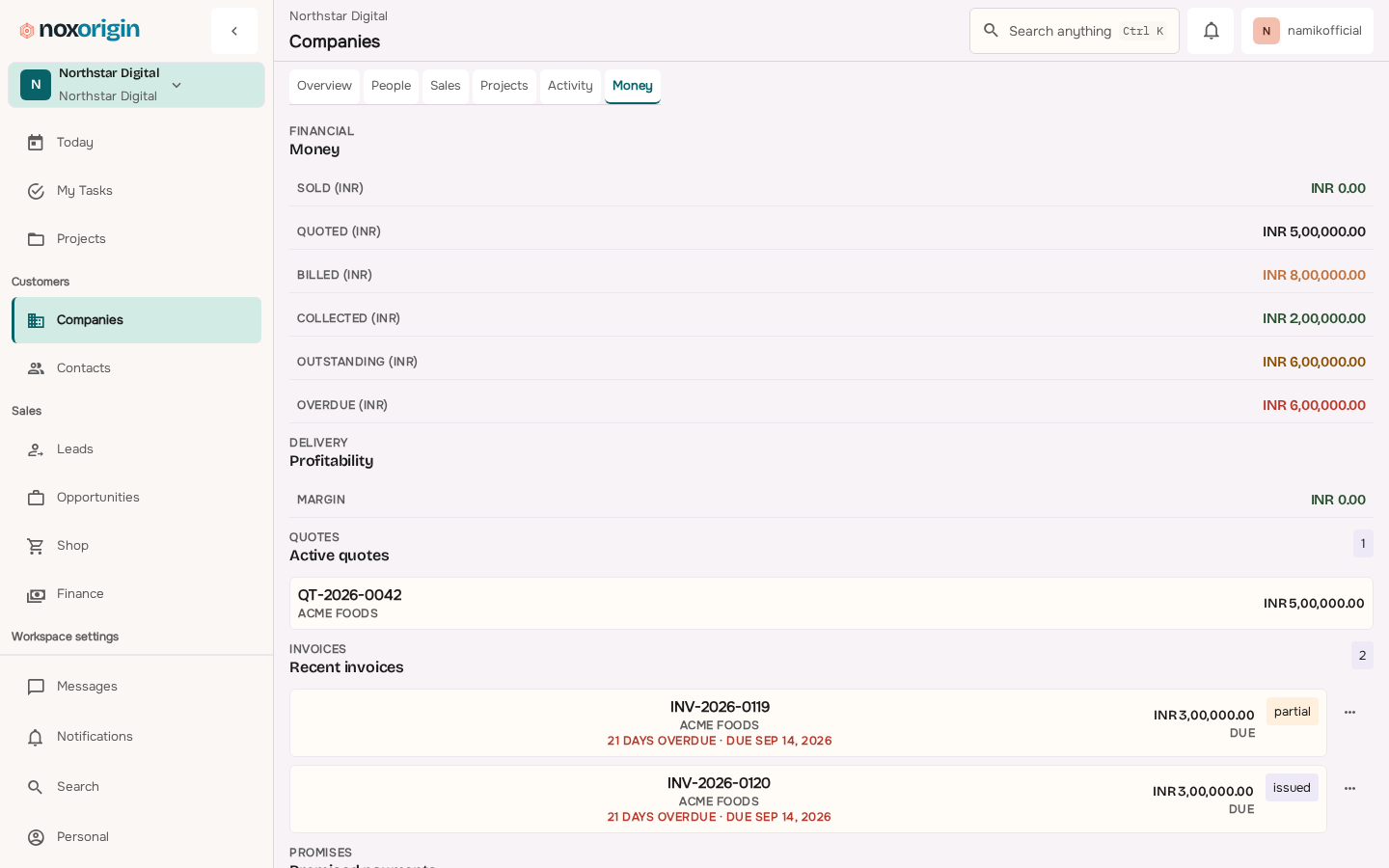
An approval changes no other permission and unlocks no next step, because the permission was there all along. It does not make the quote a contract: there is no contract editor, no e-signature, no consent capture and no countersignature, and the accepted quote is the agreement. It does not create a change-request record — a revised scope is a new quote on the same project. It does not create a milestone or deliverable record either. And the invoice raised afterwards is a separate record from the quote, with the payment separate again, where paid is a projection of allocations rather than a stored status.
How this sits beside the general approval page
Approval workflow software for a small business is covered on its own page, and that page is the right place for the mechanics. This page does not repeat it, because repeating it would produce two thinner pages instead of one narrow one and one complete one.
What the general page covers, and why it is the right place for the mechanics
Approval workflow software for a small business deals with explicit permissions and threshold-based manager approvals across quotes, invoices, payments and discounts, together with recorded supervisor overrides and the audit history of what changed and who changed it. Roles, thresholds, overrides and the history of a change are described there, and reading it before this one is the sensible order if you are evaluating the product rather than this single moment.
What this page adds, and the one thing it is careful not to claim
This page is only about the quote before it is sent: the moment the price was not the price in the list, the person whose limit decided whether it could be offered, what happens while that person is away, and the four facts the record has to keep afterwards. It does not claim that approving a quote advances it, unlocks it, or changes anybody's permissions anywhere else — because the permission is evaluated per action, an approval records a permitted action rather than moving a document to a new state.
The boundary between the two, stated plainly
General approval: who holds which permission, how thresholds are set, how an override is recorded, how the history is read. Quote approval: one document, one action, one limit, and what is left behind. If your process needs a person other than the permission holder to agree, or a chain that reroutes on its own, neither page describes that, and you should be told so before buying anything on the strength of either.
Where this is the wrong tool
The failure mode of approval software is not that it refuses too much. It is that it records a decision nobody made, or lets a rule apply a limit to a document nobody read.
No parallel approval engine, so two signatures are not available here
No multi-stage chain, no joint approval, no quorum, no voting, no countersignature and no signing order. If two named people must agree before a price is offered, that is a different product. An internal approval is also not a customer signature: there is no e-signature and no contract editor here, and the accepted quote is the agreement.
No rule builder, so policies with exceptions are not configurable
No visual rule editor, no if-then screen, no user-defined policy language, no simulation. A permission is a person, a document type, an action and a limit. If what you need is a policy that branches by client, by season, or by anything else, write it into who holds which limit — or look for a rule engine and accept the cost of a rule that is correct when written and drifts afterwards.
No automated escalation, so an absent approver stops the quote
No timer, no auto-reassignment, no substitute chain, no delegation that fires by itself, no out-of-office handling. A person moves the decision by hand, and the record shows who acted. If your business needs the quote to go out regardless, that is not a permission model, it is a different one — and it should be named as such rather than hidden inside a setting called escalation.
Approvals do not accumulate across revisions, and a revision is a new quote
The permission is evaluated per action, so an approval on one revision does not travel to the next. Separately, a change of scope is a new quote raised against the same project: there is no change-request record, no change-order type, no reason field and no impact assessment. There is no milestone or deliverable record either, so nothing here reports delivery against an approved price.
No timesheets, no payroll, and paid is a projection
There is no timesheet record and no payroll module. Expense tracking is Nox-Billings; purchasing is in Commerce. An invoice and a payment are different records, and paid is derived from allocations rather than stored, so a payment received without an allocation has reduced nothing — which is worth remembering when the question is whether the discount was actually recovered.
Nothing merges automatically, and reconciliation is a setup conversation
Merge is a setup decision: detection flags candidate pairs and a person reviews them, so the same client on two records splits quoted, billed and collected exactly as thoroughly as it splits the record. Shift close and day-end reconciliation are assisted-setup maturity rather than switches you flip in an afternoon, and a counter that has not been reconciled through that conversation is reporting new numbers rather than correct ones. This is also not a tax product — NoxOrigin does not file GST returns or any other statutory return, and the tax treatment of a discount is your accountant's question, not a field here.
Run the permissions and the quote on the plan that matches your customer count
Growth is ₹1,600/month or ₹15,000/year, includes a 30-day trial, 10 users, 50 active projects, and 10,000 contacts. Say this plainly rather than let it be assumed: these are NoxOrigin platform plans. NoxCRM, Nox-Billings and Nox-Tickets are scoped custom deployments, quoted and priced separately against your own configuration, and the platform plan price never applies to any of them. If your requirement is a parallel approval chain or a rule builder rather than a permission with a limit, raise it in the conversation — it is a configuration question, and the honest answer may be that it is a different product.
Quote approval questions
What actually stops a salesperson sending a quote below the agreed price?
A permission on the send action, checked against the figure being discounted and the limit the person approving holds. It is not a status on the document. The person whose limit is ₹15,000 can send a quote with no discount at all, without asking anyone, because nothing is being given away. The same person sending a quote with an ₹18,000 discount is refused, because the action they are attempting is one they are not permitted to take. Nothing is stopped by a warning somebody can click through.
Will it route an approval to several managers in sequence, or in parallel?
No. There is no parallel approval engine, no sequential or joint approval chain, no multi-level sign-off, no quorum, no voting, and no routing that decides who must see a quote. Approval here is a permission evaluated on the action, and the person who holds the relevant permission is the one who can perform it. If your process requires two named people to agree before a price is offered, that is a different product with a different evaluation, and this page should send you elsewhere rather than imply the chain exists.
Can I build my own approval rules in a rule builder?
No. There is no visual rule builder, no if-then construction screen, no drag-and-drop condition editor, and no user-defined policy language for approvals. What exists is a permission with a stated limit, attached to a person or role. That is less flexible and considerably easier to reason about: a rule engine lets a person describe an approval that behaves correctly on the day it is written and silently differently in eleven months, whereas a limit of ₹15,000 is a number that either permits an action or does not.
The approver is on leave and the customer is waiting. What happens?
Nothing automatic. There is no automated escalation, no timer, no auto-reassignment, no substitute-approver chain, no delegation that fires on its own, and no reminder queue that moves authority to somebody else. The quote waits. A person has to hand the decision to a colleague who holds the permission, or wait for the approver to return. The reason is that automatic escalation moves the authority without moving the judgement: the substitute did not look at the margin, the client, or the history, and the record will show their name on a decision they did not make in good faith.
Why does an approval that leaves no trace fail an audit?
Because the audit question is never whether a discount was given — it is who authorised it, when, against which version of the document, and up to what limit. A quotation whose total was reduced, with a note saying approved, or nothing at all, cannot answer any of those four. An approval that leaves no trace is not a weak control; it is an unattributed price change, which is indistinguishable from a mistake, a favour, or something worse.
Does the approval carry over when the quote is revised?
No, and this is the point most often missed. Because the permission is evaluated per action, an approval covers the action it was granted for — a specific discount on a specific quote revision. A later revision is a later action and is evaluated against the same limits from the start. Approved ₹12,000 on one revision, then a further ₹6,000 requested on the next, is an ₹18,000 discount on the current document, and it is judged as an ₹18,000 discount even though part of it was already approved once.
Can the customer accept the quote with a signature inside NoxOrigin?
No. There is no e-signature, no consent capture, no signing order, no countersignature, and no contract editor or clause library either. The accepted quote is the agreement. An internal approval and a customer signature are two different events, and conflating them is how a business ends up with a signed-looking process and no proof of either.
How is this different from approval workflow software generally?
The general case is covered separately: approvals, thresholds, recorded supervisor overrides and audit history across quotes, invoices, payments and discounts. This page is narrower and about one moment only — the quote before it is sent. What is worth being explicit about is that an approval changes nobody's permission and adds no state to the document: it records that a person was permitted to do something they were already permitted to do, and it is the record of that fact, not a gate that unlocks the next step.
Bring the discount that was approved by nobody.
We will set the limits with you against a figure you name, walk through what happens on the day the approver is on leave, and show the four facts the record keeps — then be blunt about whether you need a permission, a parallel chain, or a rule builder, because NoxOrigin is the first of those and not the other two.